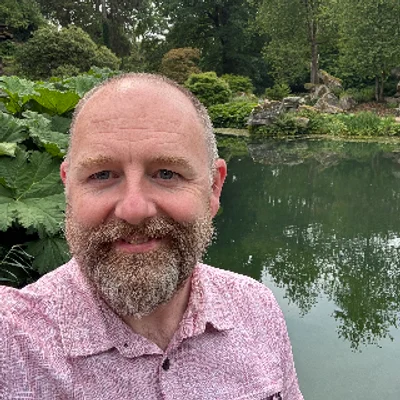
Mike Little: the British co-founder of WordPress you’ve probably never heard of (but should)…
In Autumn 2020 I arrived in a dark, cold Oslo with my partner, for her post-doc. As a new Covid lockdown came in, knowing no-one in a city not famed for its winter friendliness, I got stuck into a documentary idea about the history and ideals of Open Source. Advised by Tom of Spirit Level (whose business partner is @elio) I started on a script, and began to look for subjects. I’d heard a rumour at Mozfest that year that WordPress – the content management system powering a bonkers 45% of the web – had a co-founder beyond Matt Mullenweg, the Wes Anderson-looking guy who founded Automattic (the multi-billion dollar company running WordPress.com) – and he was from the north of England.
It didn’t sound plausible as I’d never heard of this in 15 years knowing WordPress, but I soon found a name – Mike Little. Of particular interest to me, Mike is from close to my sister’s old manor in Stockport, just outside Denton, south Manchester. I reached out, and happily he agreed to be the first interviewee of my working titled ‘What the Fork is Open Source’ – which by then had a trailer. He even set up a podcast microphone and hi-def camera on a tripod fed into Zoom so there was a hi-def version of the Stockport/Oslo chat.
The birth of WordPress
Mike and Matt’s story goes back to the early days of blogging. There were commercial platfomrs like LiveJournal, Moveable Type and Blogger, while the free and open source (‘FOSS’) crowd gathered around B2 Cafelog. But its French creator Michel Valdrighi seemed to have vanished. On January 24, 2003 Matt Mullenweg wrote a blogpost proposing to ‘fork’ Cafelog – a FOSS concept which means ‘take the code and build your own thing from it’.
Forking is amazing.. it’s the ‘one click revolution’ in everything FOSS that keeps the all powerful code maintainers ‘benevolent’. Fail to listen to your users and they can take what you built and start again. It was this story I wanted to tell in the film, not that Open Source was free, or that you can see under the hood – it’s that every FOSS project – from Wikipedia and Firefox to Android and Open Streetmap is community owned in a way even cooperatives aren’t (I wrote about the distinction here). Elon Musk doesn’t need to care about who he upsets on X as they can’t fork the software.
Mike replied to Matt’s blog a day later: “Matt, If you’re serious about forking b2 I would be interested in contributing.”

5 months later a freshly named WordPress launches, and the rest is history…
Like discovering the Harry Beck of the modern web.
We talked for two and a half hours – he’s one of the nicest people I’ve interviewed. As he listed what he and Matt focussed on during the year of work before WordPress launched I realised he was behind WordPress’s main reason for its success, the one-click upgrade, as well as the solid technical foundation on which the software’s growth and ecosystem is built (and that other CMSs dream of).

I was even more astonished by something he revealed at the end of the interview: after spending a year working alone with Mullenweg, and the launch and growth, he’d sent his CV to Automattic for a job – and never got a reply.
It seemed a sad, scandalous story – here was Steve Wozniak to Mullenweg’s Steve Jobs (indeed Matt gets user interface and marketing better than much of FOSS) and no-one knew him. Unlike Woz, he’d never had share options, hasn’t been knighted or hall-of-famed, despite having been instrumental in building The Tool That Powers 45% of The Web. Was this because he was a nice, friendly Northern Brit? Because he didn’t have a degree? Or because he’s black?
I don’t know the answer to that, and it’s not something we explore during the interview.
The film didn’t get made…
Before I could get any further, Netribution was awarded a big grant from the Interledger Foundation to finally make the decentralised open video architecture I’d always dreamed of. The film got put to the side.
Years later and I’ve still not made the film.
When the grant funding ran out, everyone had to get back to earning money, while the legal and compliance demands of what we’d built stalled it. I moved back to London with my partner, became a dad at 44. I set my ambitions a little smaller and started to contribute regularly to CiviCRM which had been the foundation for half of our project (and runs on WordPress and other CMSs). I made design improvements for this somewhat dated-looking open source tool for fundraising, mailings, subscriptions, event ticketing, contact management that’s widely used by non-profits (from Wikipedia to the Royal Television Society), but which also appealed as it’s all an indie film/music producer/distributor/exhibitor could need if they wanted to be 100% independent.
But Mike’s story never left me. It wasn’t just the injustice of his situation, it’s his cheerfulness in the face of it.


And that’s what inspires this final issue of Netribution @ 25: Mike’s stated focus on contentment. He’s the closest to the taoist ideal I’ve (knowingly) met:
“Creating, yet not possessing, Working, yet not taking credit.
Work is done, then forgotten. Therefore it lasts forever.” Lao Tsu, Tao te Ching verse 2
He manifests this, and I’ve no real idea on his journey to get that point. His contribution to the web – with a tool used by millions and encountered daily by billions – is beyond anything most of us can imagine, yet he’s not rich, famous or known beyond some older WordPress devs.
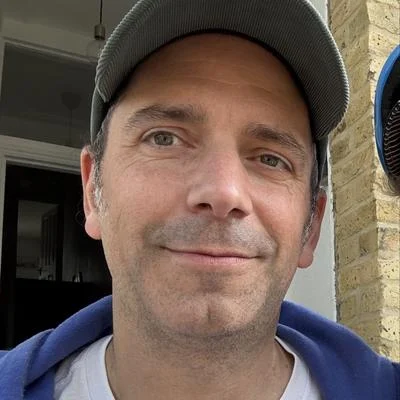
So please meet Mike Little.
I split the chat into two pieces: his story with WordPress, and then a more technical dive into his life with code, for anyone wanting to check my claim he’s WordPress’s Steve Wozniak or curious about how tech has changed since he started with a teletype machine at Stockport College in 1978.
He’s why this last issue is called Becoming Little: not just because of the Linus Torvalds quote “The big point for me really was not when it was becoming huge, it was when it was becoming little” – which can be seen in the influence of Cath and David in the history of filmmaking on the web, and that sums up what he did for WordPress… but because I think he’s the kind of hero the world needs more of right now.