Clay Shirky in 2005: if it’s really a revolution, it doesn’t take us from Point A to Point B. It takes us from Point A to chaos.

“As with the printing press, if it’s really a revolution, it doesn’t take us from Point A to Point B. It takes us from Point A to chaos. The printing press precipitated 200 years of chaos, moving from a world where the Catholic Church was the sort of organizing political force to the Treaty of Westphalia, when we finally knew what the new unit was: the nation state.

“I’m not predicting 200 years of chaos as a result of this [but] 50 years in which loosely coordinated groups are going to be given increasingly high leverage… and institutions are going to come under an increasing degree of pressure, and the more rigidly managed, and the more they rely on information monopolies, the greater the pressure is going to be.”

Fediverse Reactions
Mike Little, looking upwards, thoughtfully.

Mike Little: the British co-founder of WordPress you’ve probably never heard of (but should)…

In Autumn 2020 I arrived in a dark, cold Oslo with my partner, for her post-doc. As a new Covid lockdown came in, knowing no-one in a city not famed for its winter friendliness, I got stuck into a documentary idea about the history and ideals of Open Source. Advised by Tom of Spirit Level (whose business partner is @elio) I started on a script, and began to look for subjects. I’d heard a rumour at Mozfest that year that WordPress – the content management system powering a bonkers 45% of the web – had a co-founder beyond Matt Mullenweg, the Wes Anderson-looking guy who founded Automattic (the multi-billion dollar company running WordPress.com)  – and he was from the north of England.

It didn’t sound plausible as I’d never heard of this in 15 years knowing WordPress, but I soon found a name – Mike Little. Of particular interest to me, Mike is from close to my sister’s old manor in Stockport, just outside Denton, south Manchester. I reached out, and happily he agreed to be the first interviewee of my working titled ‘What the Fork is Open Source’ – which by then had a trailer. He even set up a podcast microphone and hi-def camera on a tripod fed into Zoom so there was a hi-def version of the Stockport/Oslo chat.

The birth of WordPress

Mike and Matt’s story goes back to the early days of blogging. There were commercial platfomrs like LiveJournal, Moveable Type and Blogger, while the free and open source (‘FOSS’) crowd gathered around B2 Cafelog. But its French creator Michel Valdrighi seemed to have vanished. On January 24, 2003 Matt Mullenweg wrote a blogpost proposing to ‘fork’ Cafelog – a FOSS concept which means ‘take the code and build your own thing from it’.

Forking is amazing.. it’s the ‘one click revolution’ in everything FOSS that keeps the all powerful code maintainers ‘benevolent’. Fail to listen to your users and they can take what you built and start again. It was this story I wanted to tell in the film, not that Open Source was free, or that you can see under the hood – it’s that every FOSS project – from Wikipedia and Firefox to Android and Open Streetmap is community owned in a way even cooperatives aren’t (I wrote about the distinction here). Elon Musk doesn’t need to care about who he upsets on X as they can’t fork the software.

Mike replied to Matt’s blog a day later: “Matt, If you’re serious about forking b2 I would be interested in contributing.”

Screengab of Mike's comment on Matt's blog "Matt,
If you’re serious about forking b2 I would be interested in contributing. I’m sure there are one or two others in the community who would be too. Perhaps a post to the B2 forum, suggesting a fork would be a good starting point."

5 months later a freshly named WordPress launches, and the rest is history…

Like discovering the Harry Beck of the modern web.

We talked for two and a half hours – he’s one of the nicest people I’ve interviewed. As he listed what he and Matt focussed on during the year of work before WordPress launched I realised he was behind WordPress’s main reason for its success, the one-click upgrade, as well as the solid technical foundation on which the software’s growth and ecosystem is built (and that other CMSs dream of).

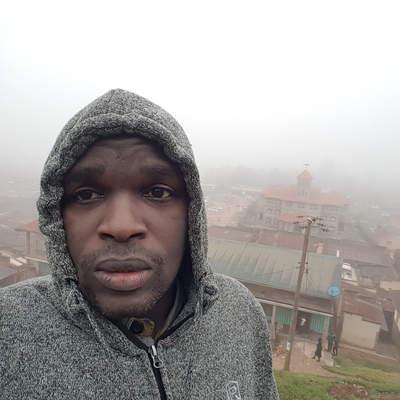
Mike Little. A black man with shaved head, glasses, one hand out-stretched. Title card reads "Mike Little, co-founder WordPress"

I was even more astonished by something he revealed at the end of the interview: after spending a year working alone with Mullenweg, and the launch and growth, he’d sent his CV to Automattic for a job – and never got a reply.

It seemed a sad, scandalous story – here was Steve Wozniak to Mullenweg’s Steve Jobs (indeed Matt gets user interface and marketing better than much of FOSS) and no-one knew him. Unlike Woz, he’d never had share options, hasn’t been knighted or hall-of-famed, despite having been instrumental in building The Tool That Powers 45% of The Web. Was this because he was a nice, friendly Northern Brit? Because he didn’t have a degree? Or because he’s black?

I don’t know the answer to that, and it’s not something we explore during the interview.

The film didn’t get made…

Before I could get any further, Netribution was awarded a big grant from the Interledger Foundation to finally make the decentralised open video architecture I’d always dreamed of. The film got put to the side.

Years later and I’ve still not made the film.

When the grant funding ran out, everyone had to get back to earning money, while the legal and compliance demands of what we’d built stalled it. I moved back to London with my partner, became a dad at 44. I set my ambitions a little smaller and started to contribute regularly to CiviCRM which had been the foundation for half of our project (and runs on WordPress and other CMSs). I made design improvements for this somewhat dated-looking open source tool for fundraising, mailings, subscriptions, event ticketing, contact management that’s widely used by non-profits (from Wikipedia to the Royal Television Society), but which also appealed as it’s all an indie film/music producer/distributor/exhibitor could need if they wanted to be 100% independent.

But Mike’s story never left me. It wasn’t just the injustice of his situation, it’s his cheerfulness in the face of it.

Mike Little laughing
Mike little thinking

And that’s what inspires this final issue of Netribution @ 25: Mike’s stated focus on contentment. He’s the closest to the taoist ideal I’ve (knowingly) met:

Creating, yet not possessing, Working, yet not taking credit.
Work is done, then forgotten. Therefore it lasts forever.”
Lao Tsu, Tao te Ching verse 2

He manifests this, and I’ve no real idea on his journey to get that point. His contribution to the web – with a tool used by millions and encountered daily by billions – is beyond anything most of us can imagine, yet he’s not rich, famous or known beyond some older WordPress devs.

So please meet Mike Little.

I split the chat into two pieces: his story with WordPress, and then a more technical dive into his life with code, for anyone wanting to check my claim he’s WordPress’s Steve Wozniak or curious about how tech has changed since he started with a teletype machine at Stockport College in 1978.

He’s why this last issue is called Becoming Little: not just because of the Linus Torvalds quote “The big point for me really was not when it was becoming huge, it was when it was becoming little” – which can be seen in the influence of Cath and David in the history of filmmaking on the web, and that sums up what he did for WordPress… but because I think he’s the kind of hero the world needs more of right now.

Part 1:  co-founding WordPress and watching it grow (from afar)

 Part 2: Mike Little’s life in code…

A bald headed newsreader with microphone in the snow outside of a cinema with Berlinale Palast and a red bear behind him,

Stories of politics vs the politics of stories…

Instead, is the heart of the Wenders vs Roy row not an older debate about how an artist should display their politics: on the sleeve or under the vest?

Do we want the overtly political cinema of One Battle After Another, the implied, less obvious and more allegorical politics of Sinners, or the universal ‘politics’ of love and loss in Hamnet that helps us see what we all have in common?

I don’t think it’s ever been either/or. Cinema, like any artform is all of these things. We get lost in rules on how to ‘express’ politics when it comes to picking a side in a social media culture war. Any artform can boil down the biggest ideas to a still-true microcosmic-expression of it. But rather than a few seconds of passing viral attention demanding zero ambiguity as it fights to win at The Algorithm, cinema takes people on a phone-free journey in a dark room to a more complicated place, releasing them a few hours later –very occasionally– as changed people.

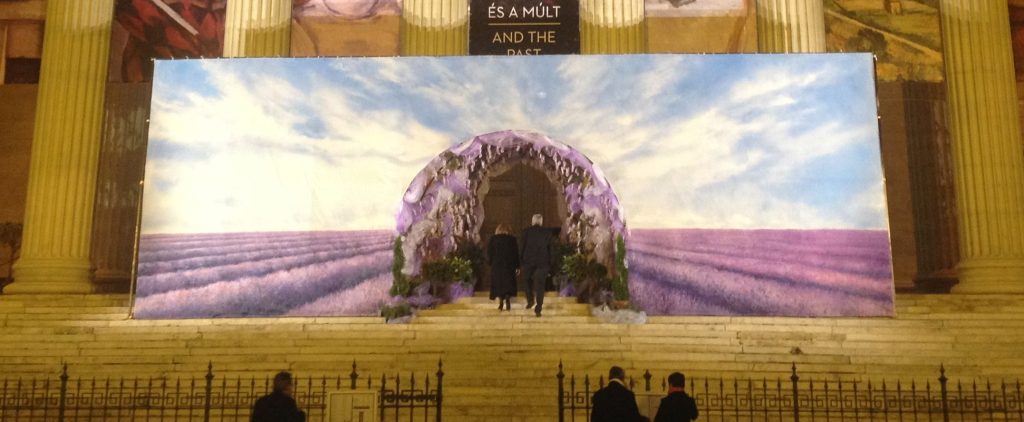
Steps of an old classic-architecutre building with large columns - with a picture of purple fields stretched across the front, with two people dressed in evening wear entering thru the middle of it…

When the medium is a billionaire’s algorithm…

The bigger question for me around politics in art, relates to the platforms we use. If the medium is the message, how do we discuss politics when the medium is now a billionaire’s algorithm?

Our boolean age forces us into a this/that binary – pick a side, and fight it. It’s the first power system I can think of that actually wants us politically expressive, and the more extreme the better. To the algorithm this is content where extremism is more likely to catch attention, encourage encouragement, more eyeball-coin. But to us it’s fundamentally important stuff, the basis of what we believe is right and wrong, the decisions we make, that shape us. The platforms almost force us to either become apolitical or caught up in unfollowing, cancelling, defriending – cutting the perceived tumours away. That’s not new – Lord of the Rings to the Potterverse tapped into simplistic Christian-type good/evil binaries, but now, without a common religion to tell us right from wrong, and a perception of hypocrisy across conventional liberal institutions, we’re left with the billionaire’s algorithms monetising multiple sets of competing ‘moralities’.

But these algorithms have no moral compass beyond increasing their owners’ power and wealth.They care just that we’re malleable and glued to their daily content hose. Multiple sides pointing at each other convinced the other is their enemy helps that. Outrage, horror, sadness – this is monetisable energy; increased attention = more money.

This confounds us when it comes to responding. We’re now on a second Trump administration, not the first. Rallying cries push one side of the pendulum a bit, but ‘the other side’ seem to then push back at some point with similar force. The algorithms thrive on it, and while the pendulum swings back and forth we never really look long at who’s holding it. To be clear: what I’m saying doesn’t mean don’t vote or stop rallying – but that it alone isn’t enough.

The oldest trick in the book…

Non-billionaire fighting non-billionaire is the same age-old tactic feudal barons, dictators and tyrants have always found to keep us distracted from looking at whatever it is they’re stealing.

It’s not new, and it’s happening again with AI; the anti-AI and pro-AI voices are focussed on arguing with each other, not the billionaires who just stole the sum total of digitised human output –from our private messages to every book, song and film ever recorded- to train planet-burning models we’re bizarrely told will replace us unless we start using them all the time.

Which leaves the question if there’s anything more urgent politically than the question of our platforms? It’s not that the billionaire’s own them – if they own your TV or video camera you can still use it to shoot any story you want. It’s that they control the timelines we scroll for hours a day that filter and nudge our experience and understanding of reality.

Are we in too deep?

I write this on my Apple laptop. It will be hosted on infrastructure maybe owned by Amazon and Google somewhere. As we show in this issue, WordPress, which publishes this, have treated its co-founder pretty coldly. Modern life makes daily hypocrites of us all. But just because we all have a million and one reasons (or even followers) why we can’t change platforms doesn’t mean we have to surrender to apathy or indifference.

Because digitally, we can also exist in multiple places at once. We can use what we have to use for practical reasons, “render unto Caesar the things that are Caesar’s” while also “working as if you live in the early days of a better” world (Gray). Compromises don’t prevent us from hope, on the basis that it will have to happen sooner or later – that view of Dr King that “The arc of the moral universe is long, but it bends toward justice.”

Digital dissonance as a strategy…

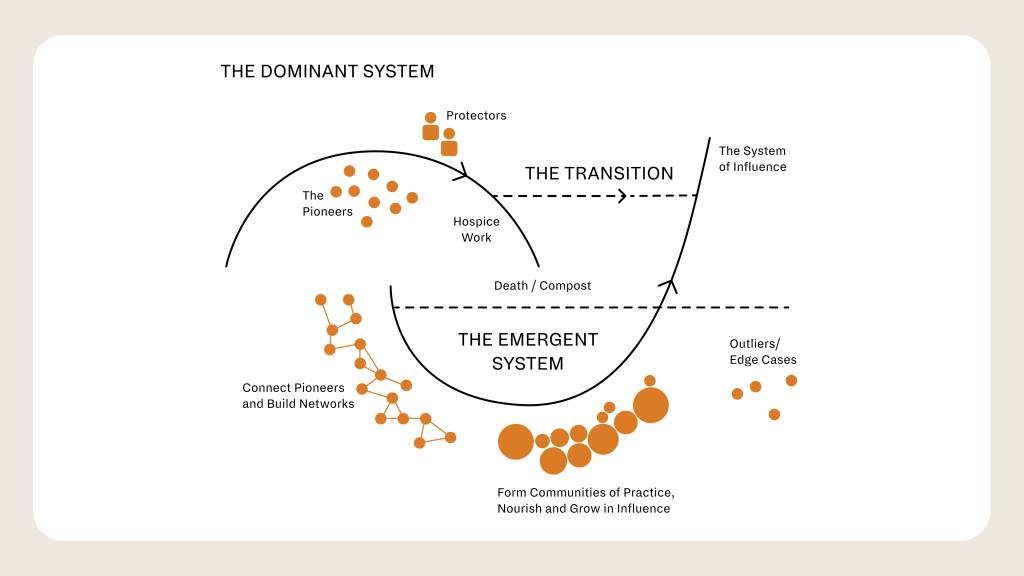
Margaret Wheatley and Deborah Frieze at the Berkana Institute came up with a theory of change I’ve returned to time and time again: the two loops model. It states change doesn’t happen like a jump cut – one narrative ending and another immediately beginning. Instead it’s more like a gradual dissolve as one fades out and the other fades.

A diagram of the Two Loops model that illustrates whats described in the text. It shows two intersecting curves together making a larger wave - the first labelled the dominant system, with The Pioneers and Protectors on it the second the emergent system. - connected with arrows.

There’s Pioneers who jump early from a dominant system to an emergent one – cell phones, the web, electric cars, fax machines, civil rights, digital video – etc. As they network together their momentum grows – and they’re supported by an equally important group who remain in the dominant system as ‘Protectors’ of these pioneers. Maybe they’re still on Substack with its Nazi-profiting owner, but they also shine light at what’s emerging and keep growing the space for it. There’s finally people who help Hospice the old system as it starts to crumble (retraining, archiving, migrating, supporting – never scolding). And somewhere along the way is a point where mass change happens.

I found a home on the Fediverse in 2017 – but I kept posting on Twitter far more frequently until Musk bought it in 2022. That was five years of living in digital disonance. But that jump was easy – I’m addicted to social media scrolling, moving to a platform with less slop is good for me. But leaving Spotify – which I’ve wanted to do since I read how they monetise AI music stolen from artists they’ve been underpaying for years – is harder. There’s so many ways I find it useful. I’m going to try to document my attempts at @leavingspotify – where the gaps are, where the things I’ve been missing have been hiding. Because I’m also tired of Spotify’s algorithm playing me the same tiny audio range of melodies that’s mostly much less diverse than my CD collection.

Call it the Digital Commons, call it the Enshitification-Proof-Web, call it Web Free, or the Fediverse, or Non-Dependent media, the Creators Web, or anything that helps us keep doing what we’re doing, while knowing there’s better ahead, and working towards it.

But platforms without stories are empty

Berkana’s theory of change could work in any direction; it could also describe a descent to totalitarianism – Pioneers pushing the edge of what’s accessible, and Protectors normalising it from the mainstream. To be free of billionaire algorithms and walled gardens alone guarantees little. We’re only as good as our stories.

Hopefully we get thru these crisis, this current throb of fascism. But the work of reminding people that the path to fascism normally starts with dehumanising – and that the cure for it lies in increasing our empathy and understanding – is never over. That much, which many of us had thought was long agreed on, is now clear. The Finish crowd-funded sensation Iron Sky about Nazis hiding on the dark-side of the moon waiting to mount a surprise re-invasion looks like almost prophetic.

Leaving algorithmic platforms can’t hurt – especially when run by a man who believes “the fundamental weakness of Western civilization is empathy“. But without stories that broaden our sense of being human, any platform, no matter how ethically run, will echo hollow.

The burden of cinema – and moving image – for those who make and support it, is that it’s perhaps better than any other medium at both de-humanising and re-humanising.

And for that, in an issue that feels like signing-off from Netribution for a while, it’s been a privelege to have been around so many blessed filmmakers.

3D animated still from Wall*E: Babies asleep in cribs, watched over by uniform hologramatic mobile with a corporate BNL logo in the centre.

The end of hero culture, Charlie XCX, TMDB, NonDe, Wall-E’s social storytelling & the BAFTA mess – some links…

  • Speaking of heroes, Ben Blaine (@ben)’s latest is about superhero culture, billionaires and Epstein – and is worth a read:
    “the mass public dumping of the Epstein files comes at the end of the Hero culture, where it is no longer quite enough to stick a cape on a body suit and count the dollars flowing in. For two decades though, the decades that saw Epstein at the impossible height of his power and influence, the dominant narrative of the age was that of a world in awe of the superhero. Who will save us? The lone billionaire with his secret identity and hidden palace. What slows him down? Fools who demand this figure is held accountable.”
  • The Publish Press newsletter: if you don’t have the youth, guts or stamina to keep up-to-date about the ‘Creator Economy’ this weekly-ish newsletter has you. Founded by Colin and Samir who setup a popular YouTube channel, they’ve built a brand and remind me a tiny bit of Tom and me 25 years ago before the realism set in – except they’re phenomenally successful.
  • LetterBoxd superuser (itscharlibb), composer of Wuthering Heights, creator of the Brat Summer and occasional superstar Charli XCX is at the Castle Cinema in Homerton on Friday night. It’s sold out – but if you can’t get a return, you can read her review of Marty Supreme.
  • NonDē – Ted Hope’s alternative vision to independent cinema – non-dependence: can only only be read about after a pay-wall – perhaps its biggest, implied statement. Thankfully Raindance wrote up a summary – it’s a series of negations, apparently – starting with 1: NonDē Is Not Anti-Hollywood (it’s an exit strategy).
  • TMDB. It seems quite a few people don’t know seem to know TMDB yet – which is like IMDB, but has twice as many films, is community driven and isn’t owned by the world’s 2nd biggest corporation.
  • Cinema Typography: 102 films, 102 fonts: cinematypography.com
  • Pop Culture Detective Agency. There’s many film essayists we could talk about, but this one (with 85m views and counting) I first met when he was helping Anita Sarkeesian’s culture-setting Feminist Frequency videos (which arguably mainstreamed discussion of the Bechdel test) during the Open Video Conference days. I like it as it overlaps pop culture, film criticism and feminism, but from a guy – and he seems to make an enough of a filmmaker living via Patreon to keep making them. He also once gave me the best put-down for a web design I’d tried to donate to one of his projects: ‘could it maybe not look so bad?’. Some of my favourite vids include The Myth of the Alpha Male, The Tragedy of Droids in Star Wars, and Wall-E as Sociological Storytelling.
  • While I’ve rallied regularly here against algorithmic big tech, I should clarify there are also some of the most brilliant voices and creations on these platforms – many of whom we otherwise would never have known about. A perfect example of this, is this post by @jhonelle_bean – a black woman with Tourette syndrome – on what happened at the BAFTA’s at the weekend – https://www.tiktok.com/@jhonelle_bean/video/7609940996914171149 – and it’s better than anything else I’ve read or seen on the topic. And that’s the heart of our time’s challenge – these monopolies are also full of brilliance, they are also how we now connect, learn and grow, despite their owner’s wishes, and carelessness.
@jhonelle_bean

Replying to @chunlifuu My two cents as a Black woman with Tourette Syndrome. We need to be looking at who on the BAFTA team okayed that moment to be aired when they had the ability to edit that out. It doesn’t give dignity to the man with Tourette’s nor to Michael B Jordan or Delroy for the hurt they experienced. That’s the problem I feel more people need to talk about. #BAFTA #Tourettes #MichaelBJordan #Delroy #Abelism

♬ original sound – Jhónelle Bean
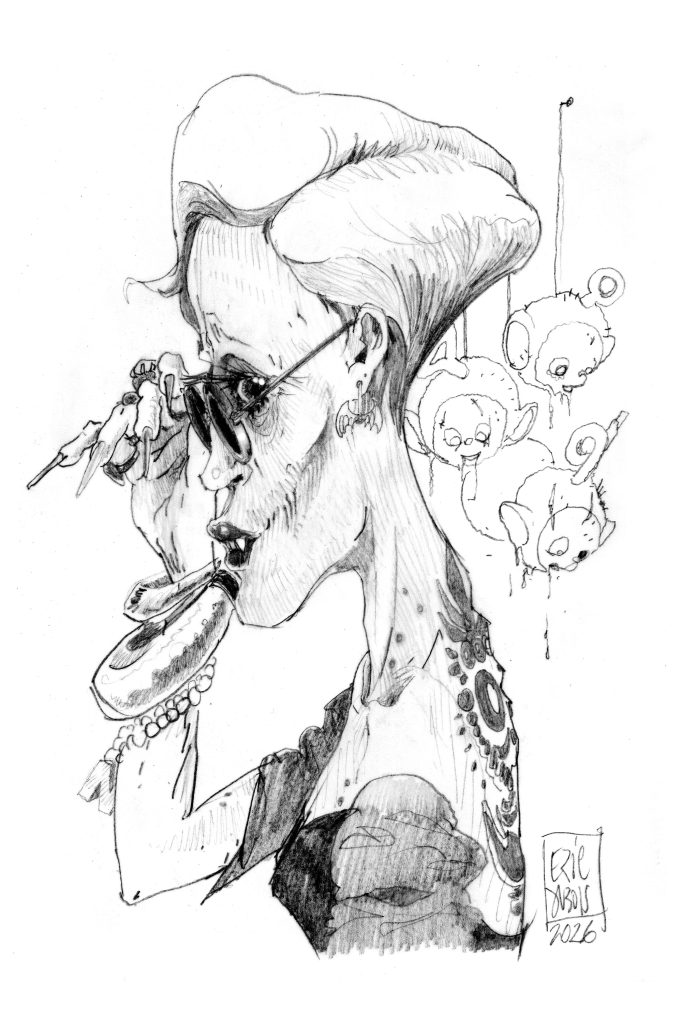
Pencil sketch side profile of a woman with shades, tall poised, the telletubies floating in the background, tattoes, bangles, cropped hair, arched back. She holds her shades

Tammy-Lynne Anderson-Planderson-O’Connor, Notflix’s Senior Deputy Vice-president of Internal and External Acquisition (Los Angeles)

In the 25 years that I’ve been interviewing the great, the good and the frankly terrible of cinema, a lot has changed. If you had told me then that one day I would be able to watch an almost unlimited selection of movies, TV dramas and a thousand and one programmes based around differing variations of people baking cakes of one kind or another, all on my mobile phone, then I’m afraid I would have thought you were having some sort of mental or emotional breakdown. 

I did actually end up having a mental and emotional breakdown, although that didn’t have anything to do with watching TV on a mobile phone, it actually involved me briefly thinking I was a talking mongoose named Gef. 

Anyway, enough of my problems. One company that is largely responsible for the streaming revolution is the entertainment behemoth Notflix. It has almost single-handedly revolutionised the way that we consume media content. But is the result movie heaven? Or is it actually development hell?

 I went to LA to meet Senior Deputy Vice-president of Internal and External Acquisition (Los Angeles), Tammy-Lynne Anderson-Planderson-O’Connor.

AC: Tammy-Lynne, it’s a delight to meet you…
TLAPOC: We’re not Netflix, we’re Notflix, I just wanted to make that clear.

AC: OK, I’m happy to make that clear. But actually isn’t that rather confusing? I mean there’s only a one letter difference between you and Netflix?
TLAPOC: There’s only a one letter difference between “clap” and “crap” but I know which one I’d rather have.

AC: Yes, of course but.. Erm, I’m Sorry, can I just check, you do mean clap in the sense of a round of applause don’t you?
TLAPOC: Of course. What other sense of the word is there?

AC: Nothing. I’ve no idea. So you say your name is different to Netflix but surely there has to be more that separates you then that? You surely can’t be saying that your USP is “we’re one letter different”?
TLAPOC: No, of course not. Netflix streams movies and TV shows. We provide a real-time on-demand, highly curated, digital deluge of high-end and low-brow entertainment, fiction and factual, on-demand, 24 hours a day, 7 days a week.

AC: A streaming service in other words…
TLAPOC: At its heart, yes. But also, no. We see Notflix content as something that integrates seamlessly into the life, indeed into the very DNA of the consumer. We want it to be become an addiction. But not a bad addiction like heroin or crack cocaine but more of a harmless addiction like, er…

AC: Murray Mints? I’m rather partial to Murray Mints.
TAPLOC: Who is Murray Mints? Is he some sort of comedian? Does he have his own show in the UK? Why haven’t I heard of him? Is he the new Ricky Gervais?

AC: No, it’s a boiled sweet.
TAPLOC: I’m not up to date on all the UK slang but I think calling Ricky a boiled sweet sounds pretty disrespectful. He’s a personal friend and neighbour of mine.

AC: I think we’re straying somewhat from the point again. You say you want Notflix to be addictive, is it true that you make extensive use of algorithms devised by the mathematician Alvie Pushkin? (See “It’s in the Maths”)
TAPLOC: Absolutely, his work into using algorithms to distil a movie into pure mathematics was pioneering but for us he went one step further…

AC: Is is true he devised a new set of algorithms that continually drive new content at the consumer? Hooking them in? Making it almost impossible for them to switch off?
TAPLOC: That’s absolutely correct.

AC: Is it also true that his algorithm was so successful that it’s been described as mathematical methamphetamine? Indeed, he was later so concerned about his creation that he disowned it?
TAPLOC: That’s not a description I recognise.

Pencil sketch side profile of a woman with shades, tall poised, the telletubies floating in the background, tattoes, bangles, cropped hair, arched back. She holds her shades

AC: He eventually disappeared didn’t he?
TLAPOC: I believe so.

AC: Some people believe your organisation had something to do with him vanishing.
TAPLOC: That’s ridiculous.

AC: But he just published a peer review study entitled “The Numbers Game: Why Notflix Are Bastards” hadn’t he?
TAPLOC: Look, the idea that we would have him kidnapped in the dead of night, brutally slain and then had his dead body disposed of by locking him in the trunk of a car that mysteriously found itself bursting into flames is total fiction. That would make us sound like some sort of cult who were trying to protect our algorithms at all costs.

AC: But…
TAPLOC: All hail the algorithm. The algorithm must be right. The algorithm must be served.

AC: Erm right, it’s recently emerged that your main competitor wants to acquire Warner Brothers. Surely a merger on that scale must worry you?
TAPLOC: I’m not worried. In fact we’ve just started talks to acquire a range of studios and intellectual properties that will make the Warner Brothers deal look like chicken feed.

AC: I don’t suppose you could drop a few hints could you? I could really do with an exclusive.
TAPLOC: Let’s just say this time next year you’ll be seeing the Teletubbies everywhere!

AC: The Teletubbies? That’s a bit old hat isn’t it? 
TAPLOC: As a kids show, yes. But as an adult-focussed underground crime fighting team? Tagline: “They’re here to make toast and kick ass and they’re all out of toast “? I smell primetime Emmys baby!

AC: Finally, what do you say to the charge that far from being its saviour, streaming is killing the film business altogether?
TAPLOC: People can be very rude about us. I’ve heard us being described as vampires draining the industry of life.

AC: Yes, I’ve heard that comparison.
TAPLOC: It’s simply not true. Primarily because we’re much more like zombies.

AC: Zombies?
TAPLOC: Yes, we go round consuming intellectual property like zombies eat the brains of the living. In time, there will be no filthy germ filled cinemas and picture houses, there will only be Notflix and the algorithm. All hail the algorithm. The algorithm must be right. The algorithm must be served. 

AC: Tammy-Lynne Anderson-Planderson-O’Conner, thank you for your time. 

The first collection of Dr Andrew’s interviews, with the illustrations of Eric DuBois are available to buy in print and digital forms from CarnalCine.ma.

Photo of David Nicholas Wiilkinson

David Nicholas Wilkinson: indie docmaker & distributor on keeping his independence.

He is just finishing his fifth feature documentary – 2 in 1 – driven by his experience of stage four (aka incurable) bowel cancer. The film looks at the rapid rise in bowel cancer among young people, and while we’ve known each other since Netribution was two film-degree dropouts in a trenchcoat 25 years ago, it was this subject that I reconnected with David over. My sister June died of bowel cancer in 2010, an event that saw me abandon projects and question everything for many years after. It should be released in the Autumn (disclaimer: I’m an exec producer) and it will be released for free and for fundraising. He describes it as “a film that most people will never watch… but for some small number, it might save their life… and that’s a really good way of putting my skills to good use.”

So this is kind of an interesting, um, time to interview me because in three weeks time I’ll be 70.

I also have a, you know, life-threatening illness.

And so I’m, I’ve been in a really very reflective, um, stage of mind for the last year about, you know, whether, what have I achieved through my life, what have I actually done, did what I set out to do, had, did, did that work out?

I come from, I always say working class background, but I sort of misleading. ’cause my father, who was from extremely working class background, had earned enough money to buy a detached house in a very nice part of Leeds on a private estate, but we didn’t have much money. So I did a paper round to, so only, there’s only two times in my entire life and I’ve ever been motivated by money. So I got a pound a week for six days a week. And, uh, in the course of doing that, I, the milkman approached him and he said, oh, a, he said, you are quite good looking. You should be a model. And I went, what’s that? And he said, I’ve just bought shares in a model agency in, in Bradford. And he met up with my mom and dad and we went to see this model agency and they took me on and I, I did my one and only commercial, which was for a toy called Sailor Boy, which is for my friends find really amusing, the only commercial sailor boy for a camp. It was like a hair dryer that you used to blow these plastic boats around. But from doing that, I then did Grattan’s catalog and Kay’s catalog commercials. And I used to get three guineas a day, which was a huge amount of money. I became 14 and I thought maybe I can do this as a living. And I joined a local amateur operatic and dramatic society. And then for whatever reason, I was motivated a Yorkshire television, which was one of the five big ITV companies.

They started a number of agencies in leads and I joined one of them. And within a very short space of time, I found myself auditioning for something called the Winslow Boy, which was a, a play here in, in London’s West End. And I had to have tion lessons for it. And it was that extraordinary thing that I became a professional actor within six or eight months. It was all fluke how I got found out, what happened, the say. So the agent that I went with, she wanted 25 guineas a year to join her acting course. And we didn’t have that sort of money. And when you went on the acting course, she had this big war chart and it had lots of photographs of all these people on it. And it just so happened she had a space and she put my photograph on there and didn’t cost anything. And then she sent that big war chart down to Binky Beaumont, who was at the time the West End’s biggest theater producer. And they looked to all these people on it and they went, we wanna see him. And something about my face was right for it. So there was that fluke of it. And then the other thing is that they wanted me, the producer, the director. And so Terrence Rattigan, who was the writer, wanted me. And Kenneth Moore was a star, and he never really did. And um, I started on, I was the first one to start working on it, but then they found two other boys. And because of the licensing laws, we had to all take it in turns. And Kenneth Moore sadly turned out to be a major c**t, a really, really nasty man. And he didn’t like me because I went to a secondary modern school. Now, secondary modern school means you failed. You are 11 plus, you are not very bright. They had terrible two tier system, and the other boys all went to public school. You know, they’re very top private schools and he never liked me. And so I did the out of London tour and I never got to play it in the West End. And they told me it was because my voice was breaking. And I knew that was a lie. And I always thought that it was because Kenneth Moore thought I was a bad actor. And that, that the fluke of me being found and then the way that I was treated and he got rid of me. And it was only when my father died 29 years later that it was all down to the fact that I was common. And he never thought I got rid of my Yorkshire accent, which is ironic because I speak to you now, never having had an elocution lesson for, you know, 55 years since I stopped it there. And so I never thought of acting. I, I understood the precariousness of it and I was very fortunate I was successful.

But when you start young, all the other actors you work with, they say to you, David, you’re 14, you’re 15, you’re 16. Don’t take it seriously.

Luckily I started at the bottom having done these wonderful plays. I I did the Winslow Boy again on tour with Richard Todd, who was a man who was nominated for an Oscar and was a much bigger film star than Kenneth Moore. And he had no problem with my, with me or anything about me. But I then went to Harrogate in Rep and I learned everything from the bottom. But I was so acutely aware that people would say, it’s not really a profession that you can take seriously. And everybody gave me examples of people that had been very good in things and couldn’t get work. For instance, there was an actor who was truly brilliant every just before me about 5, 6, 7 years before me. He was in Oliver Twist, which was in the same theater as the Winslow Boy. And everybody said, there’s this brilliant actor, absolutely the best art for Dodger ever, but now he’s grown up and he can’t get any work. And I said, what’s his name? And they said, Phil Collins. And I said, what’s he gonna do? And he said, well, he really wants to be an actor, but nobody will employ him. So he is gonna start a band. And, um, Phil Collins became very successful.

But, so it’s a sort of everything in this business. Everybody goes in it with a set idea of what it is. The, the advice I’ve been given by a great many actors is find another job and do that the same time as acting. And, and so many actors I know have a second job during the late seventies and eighties and nineties, that second job became voiceovers. That became huge. Mary Margolis, who’s a very good friend, and she was only like quarter of a million pounds in like the eighties. She was like the number one woman for doing it. But I never got into that and producing became the thing I thought I would want to do. And I optioned a book called Porter House Blue, which I thought would be brilliant. And I, I failed miserably to make it. I lost all my money I’d made as an actor and I did very well as an actor. And eventually got made as a television series and it won lots of BAFTA awards and it starred David, Jason and Ian Richardson.

And I’d got Donald Pleasence and Denholm Elliot, but I just couldn’t get it off the ground. I didn’t know what I was doing.

I became quite by accident the first ever independent producer to work with the BBC. And it was on a, a film, a television film of Virginia Walls to the lighthouse. And I was originally going to play one of three parts. And when the BBC found out, ’cause I I played some nice parts of him. So I, I played the lead in something that Mike Newell had directed and Ian McEwen had written, it was the first thing he’d ever written for the screen, which I got, I got 75 pounds for doing and 125 pounds for in expenses. That’s 200 pounds. It was a week’s work, it was a very, very good play. But that’s how, and even even then, 75 pounds, it was, I think the national average wage at the time was probably 50, 60 quid a week, something. So you never got that much as an actor. So I was going to play one of the parts and the BBC said, oh, I said, that’s why you’re doing it. I said, no, no, I really want to be a producer. And so I decided not to do it. And we cast an unknown actor I’ve never heard of since called Kenneth Branagh and the part, and, uh, I never thought about acting a gay. And if anything, that was my, my big mistake. And it’s funny how it turns out, I mean, I I was a useless producer. I think I have an instinct about what will work absolutely with Porter House Blue. I had the right idea with to the Lighthouse, which was somebody else’s project, but I found it and ran with it. But to be a successful producer, you have to be absolutely totally ruthless. You have to lie and you have to lie all the time. You have to lie to investors. You have to believe they’re going to get their money back. And this is the truth that nobody ever discusses. Most films will never get their money back. And it’s a terrible realization. And it took me 25 years to really face up to that. And, you know, I’ve distributed now well over a hundred films and just two or three of them have got their money back. And two of them happened to be my films. And they were made for so little. So that’s why there’s an awful, you know, France and Germany and Scandinavia and things. They, they have big subsidized and there’s not only subsidized schemes on a government level, you get support in France. Every third thing film, I think that goes into a French multiplex has to be French. Here. It’s not the case. And everything that’s shown, every French film shown in the French cinema is bought by two different broadcasters for decent money. So it’s a very healthy society.

So it was a, you know, it took me a long time to realize, but you, you have to lie. And I never could. I did once I did a film with Lenny Henry and Pete Postlethwaite which was a television film, and somebody I knew had sold his company for 70 million in Yorkshire, he put up a hundred thousand for it. And he lost every single penny. But, and I felt really guilty about that. And o only towards the end of his life did I find that he was able to offset that against profits in another area. I’ve always loved the business, but I’ve found it very difficult to make a living. And it, it was constantly looking at ways of what to do. And I always wanted to get into documentary because I came from drama. Nobody would take me seriously.

The biggest mistake I made of my life was not continuing acting. People like Mike Newell, who I worked with in John Irving, who went on to be very successful directors, when I would bump into them in the street of somewhere and they would say to me, David, why did you stop acting? But if I’d put the energies and efforts into acting that I put into producing distribution, I, I would’ve gone on more. And I turned down some really brilliant parts, the best television director that this country’s ever produced called Alan Clark. And Alan wanted to me to be in something called Bar with David Bowie. And he insisted I go and have a meeting. He’d offered me a job years before and I couldn’t do it. It it liked what I did. And I had a meeting at the BBC and I said, Alan, I don’t want to do it. And nobody’s taking me seriously as a producer, that was a huge mistake. A I would’ve worked with David Bowie and might have got to know him, and who knows, I could’ve got him for a film, but he was also bloody good production with this brilliant director. And I realized after about 10 years that I’d made a big mistake and I tried to get back to acting and I couldn’t. So after 10 years had gone by, I was desperate to try and find something. And I was doing like the thing that Anthony Hopkins directing for me, Dylan Thomas returned Journey. It was a really bonkers production. And we made the whole thing for 48,000 pounds. And, you know, and I got three grand and Tony got three grand and my fellow producer got three grand and it wasn’t a way to make a living. And so I drifted as I was lost looking for things to do, and I realized I didn’t have what it made to be a type producer. I didn’t have that ruthless, nasty streak. And so I became quite good at distribution and I started distributing my own films. I did distributed a documentary on me called James Herriot’s Yorkshire, which was very successful financially.

And I thought, oh, I know all about distribution now. And I didn’t, I was an idiot. I thought I knew it all. And I never had a film as successful of that, that grossed about 15 times its budget that was on video, the old video. But you have to pay the, the store take 50% of the money and the replication and you had to pay VAT and all of that. But the investors and everybody that worked on it, we all got it, went into profit.

I I raised the money. It took me four years to raise the money. Nobody believed it would be a success. And I, I was very fortunate that Christopher Timothy, who’d played James Herriot in the television series, was my business partner on it. And Chris worked really hard to make it happen. But we, we invented this whole new market of sort of special interest video. It became the very first one. And I remember when I went to Chris and I went to see WH Smith’s in Swindon and they said, it’s fantastic what you are doing, but you should know David and Chris ’cause they knew we were using some of our own money that we’re going to give you an order for 200 copies and we don’t think it’s going to sell. We, we said, if you are very, very lucky, if you are really lucky, it’ll sell 5,000 units. But they didn’t understand the market. And I’d spent four years understanding the market and I, I knew it would sell to tourists. I had a man that sold walking sticks and maps and he was going to distribute it. He was gonna take it around all these cafes, um, little news agents, gift shops and things. We sold 9,000 in the first week and we sold 22,000 in the first month. And we couldn’t replicate enough if, if I released it in October. And by Christmas it had all sold because it became a perfect Christmas present. And Chris and I, this is, this is being absolutely honest, if I’m being really, really honest, I bet 50% of the people that got that for Christmas never watched it. It was just a present called James Herriot’s Yorkshire showing lovely Yorkshire. But that then set off an industry. And lots of other people wanted me to replicate that and do it, and I wouldn’t. And they made like John Betjeman’s Britain and the Lakeland Poets and Hardy’s Wessex and Smiths spent a fortune doing this not understanding why ours was a success, because it was based on a bestselling book, which was based on a bestselling television series. And I had the star of the television series. So all those elements came together and they couldn’t understand that. They just thought anything would sell. So I got really, it was hard work, but it was also lucky. But I thought that every video and later DVD that I would release would do even better than that. And I never had anything come close. Monty Python thing I did, I did a couple of Monty Python films and they did very well, but I had to borrow a lot of money in order to pay the advance. ’cause they wanted a lot of money and I gave them 50% of the income and I had to give 25% to the man that gave me the money. So although it did, well, I didn’t get that much money myself, but it, it established me. I’d taken two Monty Python films that nobody else thought would work. Monty Python’s Fliegender Zirkus, which were made in Germany, in German, and um, yeah, but, and the Pythons then, ’cause I became very friendly with Terry Gillam, you know, they then sold them. When I showed it worked and I cleared all the music rights. It took me about nine months to clear the music rights.

So time consuming. Once that was done, they then sold them to Sony for a shitload of money. And my rights were never long. I didn’t have a long enough. But it was good because it then I then went, I’m going to go into distribution.

If you want to be a filmmaker, you have to understand distribution and you have to understand international sales because only when you can master that, will you ever succeed As a filmmaker, you might get lucky and you might make a film and it might work and it might have distributors bidding for it. But I found very few people in these 56 years that have ever been like that.

Yesterday my film, the Marbles was released. It’s my fourth film as a director. So within 10 years I’d made four documentaries.

I’m making my fifth now. And I have to be absolutely honest. People look at me, they come to the talks I do and they meet me and they go, Dave, you very successful. You know my, my last film Getting Away With Murders, which was about an aspect of the Holocaust, no one had ever covered before. The Guardian voted off the 1,284 films, released new films in 2021, they vo voted it as the 17th best film in the uk. And by default it was their number one documentary.

So it beat Summer of Soul, which won the Oscar and a BAFTA.

I could not have done any of that. I could not be here tonight with my film playing in the marbles in this cinema. But for one reason is I’m the distributor.

I understand distribution, I understand marketing, I understand exhibition, I understand production, I understand how to make a film, put it together. I understand how to finance them. And only by, and it’s taken me all these years to learn all those skills that I’m now in a position that I can exploit that for my benefit. But my films don’t make money. But I still manage to make other films because I’ve now got to the position, partly because of my age and partly ’cause of my standing. I go out and find people who are interested in the subject that I’m doing and I say, give me your money. I don’t say invest, I say donate. And that takes an awful lot of time.

So I released an Irish film for almost 25 years. All I released were British in Irish funds. And again, nobody else in the whole history of the film industry has made that commitment to either British films or Irish funds. It was a really good film. It had won lots of awards, but it came out in what’s called an Indian summer. So it was this breathtaking in September and it was marvelous the weather. And people just didn’t go to the cinema ’cause everybody was in the parks. And that meant the box office was abysmal, not just at the, the Curzon cinema, but several other cinemas. So when I went to cinemas who were interested, they said, David, it’s performed really badly or not taking it. The sales agents who were selling it around the world, they went to try and place it. And people said, but it’s done really badly and we’re talking hundreds of pounds. And I’d spent the best part of 35,000 pounds on it. It’s a very, very, very brutal industry. And I get so upset now when I’ve had grown men and women crying because their film that they’ve spent five years on and they’re just instantly fallen. And there is a stupid assumption, which I had when I went into, it’s why I didn’t start producing theater. I had produced theater when I was an actor. And I thought, no, if you make a film and it doesn’t work, you’ve got an asset and you can sell it so the investors will be well off. I’ve realized that that’s the crock of s**t. And it only really works if the film is successful in the first place. And I, I gave back my entire library of over a hundred films some years ago that I distributed and gave it back to the filmmakers. ’cause I said, there is nothing I can do in this, in this industry. Now there is no ancillary market for b and c listed pictures. Really? People would buy hundreds of DVDs every year. I’ve got thousands in my house and in my loft and everywhere the shed, and I never look at them, but people, it’s that obsession we have as human beings. They wanted to own them. And I know that people were buying DVDs, I released them, they would never watch them. And it was a sort of crazy thing. And now it’s all online and that market’s gone. But the income you get from online has never covered the sort of income that you would get from Blockbuster as a rental or via WH Smith. So that it’s totally different. But, but the process of distribution is still the same. You have a film you have to convince, first of all, you’ve got to convince the exhibitor why are they, there’s 18 films coming out this week. You can only show seven films. Why mine? You’ve got to convince somebody to review it. And my documentary came out this week and I’ve got 12 very good reviews of, which includes the Financial Times and The Guardian. There’s another filmmaker, he’s also got a documentary coming out this week. He’s got three reviews and one of them is from The Guardian. That’s all he’s got. So I understand because I built up these relationships, but my last film got 40 odd reviews.

That was a much more serious subject. And the timing on that was better than the timing on this one. It’s about convincing people. That’s all distribution is you’ve, you’ve got to persuade them why this one. And so the marketing of that is similar, whether it’s on A DVD or it’s online or it’s getting someone to buy a ticket. It’s a really complex industry in many ways, but it’s also incredibly simple. I’ve got this can of baked beans, I’ve got this film, you know, with Ewan McGregor in it. Do you want it? You know, this is it. Without distribution in any industry, it doesn’t matter what it is without distribution, nobody knows about that product.

Now any film can get out there, there aren’t really the gatekeepers. You literally go to YouTube or Vimeo and you load it up and you say to people, I’ve got this. The problem is monetizing it and making people aware of it. I mean, there are just so many films, it’s staggering. Tubi, which is owned by Rupert Murdoch has access to 250,000 films and programs.

If that is the case, it is a staggering number. And that’s the problem. You’ve now got TOD, which is basically you get a penny or 1 cent every time somebody watches your film, you give it to Tubi, you give it to Amazon, you give it to Plex and Pluto and Roku and all these channels, there’s over 200 of them in America. They take it for nothing and they give you a pittance and you hope that somebody watches it. And I’ve got films out there and I’m getting p**s poor money in. And so what you discussed is true. There’s now more films available than ever before. The trouble is how are people ever going to find them? But Tvo is wonderful because you can be on 10 platforms in the same country all at the same time. But the the income is tiny. I’ve just had a statement, you know, I’ve got like 270 quid from, this is from America from, I think I’m on 14 different platforms. That was a big mistake my going that route.

What happened is, Guy Richie, Matthew Vaughn never having made a film, decided to make a film. They got the money from people they know and they made this film and it was hugely successful. And the guy, Richie married Madonna and he became a multimillionaire and they never look back. And that’s what everybody who makes a film, they think it’s gonna be really big like lock stock. They’re gonna marry a Madonna and they’re gonna be really famous and that’s it for the rest of their lives. But the trouble is, is that most of them don’t do it. And a lot of them blame themselves. And some of them have right to blame themselves. They’ve not listened to distributors, they’ve not listened to sales agents. They’ve made films they shouldn’t have made. But often it’s just fluke as to why a film works and it doesn’t. There’s a film I released in, I went name the Year because then you can find out what it was, but roughly 20 years ago. And it was an incredibly impressive young man. And he had raised a million pounds. He, I mean this man, he’s like 21. I’ve rarely met anybody that’s so dynamic and had such a personality. He had, he had all the right ideas except one I found first time filmmakers. They’re either idiots or they know what they don’t know. And he thought he knew it all. I would later find out that they made the script on the third draft. You should never do that. That the best film I ever distributed was Lenny Abramson’s. Adam and Paul and Lenny went on his fifth film, was nominated for an Oscar and Lenny spent 18 months perfecting that script. He was in no rush to make it. And they made it on the 27th draft. And it is a work of genius. And this young man just thought, well, I’m happy with it. He should have gone to somebody like Colin VAs. Colin is a top producer, works with Martin Scorsese. He came from Scripps. He has start. He, funny enough, he produced Madonna’s film that she directed. And you go to someone like him and you say, Colin, I want you to be an executive producer. I’m going to pay you 10,000 pounds a day for five days. I want them at the beginning of the film just before we start shooting at various different stages. And somebody like Colin would’ve jumped at it, you know, 10,000 pounds a day. You would’ve got his entire expertise.

So things he learned when he was producing Gangs of New York, he might have brought that into it. You would’ve got that. That’s what it did. But because this director was insecure, he didn’t want anybody like that. And the film is all right, that’s all it is. It’s all right. I wouldn’t have released it if I didn’t think it was good. And I sold it to a broadcaster.

And the broadcaster, it paid the least amount of money I’ve ever licensed to film for. And that director and those two producers have never done another film. The the writer hasn’t done another film. And it’s a classic case of thinking you know, everything and not, not being aware of what you don’t know.

I’m almost 70 and being in the business for 56 years, I still don’t know very much. I had no training to be an actor. I had no training to be a producer, no training to be a distributor. I never learned from anyone else. No, I’ve never been on a writing course on a screenwriter. I’d never read a book about screenwriting. And I certainly never had any training to be a director. Everything I’ve learned on the job, and that’s really the stupid way to go because it’s you, you spend so much time doing it. And I was with Don McVey, who’s my DOP once, and he was doing something, I can’t remember what it was, we’re filming abroad. And he said, you don’t know that. And I said, no. He said, you are a director and you’re a producer and you don’t know that. And I said, yes, I don’t know it. He said, I can’t believe it. You don’t know that. He said, why don’t you know that? I said, because I’ve never needed to know it before and I’m employing you. And you know that. He said, but aren’t you embarrassed? And I said, why Amm? I embarrassed. I said, I’m now learning it from you. It’s gonna help me. What’s it to be embarrassed by? I’ve done all these things that he would’ve never said that himself, that I don’t know this. He would be afraid of looking like an idiot. But what does it matter? And the only piece of advice, and it’s for anybody watching this, I remember this that I’ve ever had, I got to know John Schlesinger. He’s the director of my favorite British film of all time, which is Billy Liar, which resonates with me because it’s very like my story in a way. And I got to know John before my wife did, but my wife worked with him five times. And we loved John and we spent time with him. And my kids loved him. He had a, with the money he made from far from the Mading crowd, he bought this huge house in the country and it was called Strawberry Hole, the House. But John called it strawberry bum hole. And my children used to love this. And we’d go down and state there, he was doing cold comfort farm, this television movie. And my wife’s costume designer had Miriam Margolyes and Kate Beckinsale, Joanna Lumley and Ian McKellen at Eileen Atkins, all this incredible cast. And John found out that I’d dropped Amy at Twikenham studios. So he said, oh, do get David to come and see me. I want to chat to him. So I said, oh, well, okay, I’ll go there. And he is doing a scene with Eileen Atkins and Mary Marleys whipping up this mge. And they did the scene once and then they wanted to do it again. So they had to whip up the mge and get it ready. So it was about 15 minutes while the props, people sorted this out. And John was asking all sorts of gossipy question, who’s f*****g who darling? And uh, yeah, what, what’s going on in there with all you young people? And uh, you know, it’s who, who’s a c**t now? And all that sort of nonsense. And after a bit we’d sort of exhorted this, but there was still time and I was a bit uncomfortable. So I said to John, I dunno why I said this. ’cause I, I, at this stage, I’d never thought about directing. I I got into directing purely by accident. He is uncanny how it happened. And I said, John, I said, is there a secret to directing? And he roared with laughter at this huge great laughter. And he said, of course not. And then he said, actually there is, he said, there is, he said, at least 50% of being a good director is choosing the right people in every department, every actor. He said, always choose the right least he said, and then you let them get on with what they do, you don’t interfere. And he said, if they have a suggestion, you listen to it. You don’t ever not listen. You take them seriously. You take them aside and say, please tell me it, and if you don’t like it, you don’t use it. If you like it, you use it. And then he told me this film he made called Marathon Man with Dustin Hoffman and, um, Laurence Olivier and John died many years ago now, but he said the grit came up to him and he said, um, I’m a Schlesinger. I’ve got this idea. Do you might have said no, tell me the idea. And he said, do this, do that, do that. And John went, fat is brilliant, right? Everyone, we’re doing this. This is what we’re gonna do. And John said, when the film came out, whenever people talked to him about that film, he said, at some point in the conversation, they remember this scene, how brilliant it was. And he said, it wasn’t my idea. Everybody thinks it was me. It was the grip’s idea. I’m going back to the man, the young man who had the million pounds to make the, that was his mistake. He didn’t listen to other people. He didn’t get more experienced people involved. Because more experienced people help you. Nobody wants to make a band film. They want to make your film the best they can. And I, I listen to people all the time. I mean, I, because I come from the theater and it, it sometimes drives me mad. I believe in arid core where everybody works together. And it does sometimes do my head in when people are going, oh Dave, you should do this, you should do that. And I’m going, look, I’ve already said I don’t know how to do that. And they carry on. But that’s, that’s the rules I’ve set. So I have to listen to them. And you know, sometimes they’re right, sometimes they’re wrong. Sometimes I find they’re right when it was too late, I’m watching the film and going, oh my God, they were right. I should have done that. A problem that a lot of actors have is that directors and producers don’t understand their process.

And I think it’s really important that if you are serious about being a director, even a producer, but a director, you need to go to the theater. You need to understand how an actor works out the arc of their character.

So it’s brilliant in the theater because you start at the beginning and you go to the middle, there’s an interval and then you go to the end. So you work all that out in rehearsal, even in small companies, theater companies, you have sort of two weeks rehearsal. If you’re a national theater, you could have eight weeks rehearsal. And most actors never get to rehearse very much on film. So to have a, a director who understands that, they’ll be insecure about it. Even the biggest actors, Anthony Hopkins, uh, who I helped, I mean, I gave him his chance to be director. So he and I had these extraordinary conversations about the problems he has working with, uh, directors and how they don’t understand the process.

So having done lots of things, I mean the, the great thing with Rep as an acting a SM, so I swept the stage and I, you know, painted the scenery and I had small parts and I bought the fruit and vegetables for, you know, a scene that you needed. Fresh fruit and vegetables. I did all of that. So it’s an incredibly, uh, wonderful learning process. And Harrogate was small knit community. I mean, ironically there were 47 people in the company. Now you probably have, it was very well funded. You know, if, if Harrogate has a theatre at all now probably be lucky to have 10 or 12. But it was, so we had three companies and there were three different directors on the move all the time. And we had people like Martin Shaw there and Tony Robinson, uh, would come up and do things. And John Challis, who is in a series called, um, only Fools and horses and lots of people that would go on to do great things. Um, and there’s something about doing theater. So when I directed my first film, which ironically was called the first film, proving the World’s first film was shot in Leeds in Yorkshire, for those who don’t know where it is. And I have a joke ending and everybody on the film that the DOP producers on it, the editor, everyone said, David, this is a terrible, it’s terrible.

So it comes and the credits start and then it happens. And I said, no, it’s going to get a laugh. I said, David, David is embarrassing. I mean a couple of people really tried to talk me out of it. And when it had its premier in Edinburgh, the full audience, it got a big laugh. And in most of the cinemas that it played in, it got a laugh. And those who they said, but how did you know that? How did you know? I said, because I was an actor, because I’ve been in the theater, you instinctively know what’s going to be funny and what isn’t. I’ve finished the Marbles with a MAF like that. Miriam Margolyes has a line, and in the cinema it gets a laugh. And the worry is, I know that people probably won’t laugh when they see it on television or on online or something. And I think probably with the other one, but I was making it for the cinema and I thought, well, I’ll keep it in for the cinema. So you need to learn all the time. You need to be a sponge. And if you look at anything, whether it’s science, film, you know, the catering industry, hoteliers, you know, whatever it is, transport is that any new way of working, any new concept comes from young people on the whole. And that’s a young person’s strength.

And you just need to combine that with experience and wisdom. So that’s why if I could have gone back to when that young man raised a million pounds and he’d come and ask my advice, I would’ve said Surround yourself. You come up with your ideas and you talk them with your team and you work it out together. And so somebody like a Colin Vaines or if he’d had a more experienced DOP or costume designer, whatever, it would’ve, it would’ve made for a better film. It, it’s everything. One does is experience. And, and I love it that I’m still learning and I learn from young people all the time. I learn from people of all ages. But, um, I, I think it’s when you close your mind off the, the people get to sort of in their forties, you think, I don’t need to learn anymore. I’ve learned it. And that’s when you close down.

The marbles has obviously taken me five years to make, and that’s all down to the money. It’s my putting the case why the path of marbles should be returned to Greece. They were stolen over 200 years ago and have been in the British Museum, which is very near this cinema. It’s YM so b’s the Garden Cinema in Covent Garden have taken it because it’s just a stones throw away.

And um, that’s opened. And in the course of making the marbles, I discovered I had stage four bowel cancer, which was a major bolt outta the blue. And I knew instantly I was gonna make a film. But the prognosis was bleak. I needed to know that. I mean, it looked as if I was gonna die fairly soon. Um, and I didn’t want to make it, you know, old man has bowel cancer. That didn’t interest me at all. And when I realized, so six, seven months had gone by and I thought, well, may, uh, you know, the chemotherapy’s doing well for a while, I’ll start making the film.

But I, when I had my very first chemo on the day I was sat there and there was a young man who’s 42, very fit looking. He was had shorts on and a t-shirt.

And he was with his wife and I was with my wife.

And, uh, my wife doesn’t come anymore, you know, but she was a bit bored ’cause I’m sat there having all this stuff pumped into me and she wanted to go and chat, or not. She did. And she came back and she didn’t say anything. And then when he left, she then told me and she said, well, he lives near us. He has the same oncologist as you. She said, he’s 42 years old. He, like you has stage four bowel cancer. Her, his wife is a senior nurse and he has either two or three children, I can’t remember.

And um, it’s terrible. You have no symptoms, no symptoms whatsoever.

And I thought, I cried. I actually cried. I thought this young man 42.

Um, and I thought, there’s my film I’d already researched and I found that bowel cancer or colon cancer, as they call it in many countries, is on the rise in people under 50. And I thought, that’s my film. I can use my experience to get into this story and people can see the treatment I’m having. But the story is, why is it rising on the young? And people are ignoring young people with their symptoms.

And then about six, eight months had gone by and I was with Dr. Murphy, my oncologist, and I said, look, you know, this man really gave me the idea. And I said, look, is this betraying patient confidentiality because I really would like to film him?

And uh, she said, well, no, she said, because he died three months after you met him.

And so that, that is the whole thrust of my film about what can be done. I mean, there’s, there’s the people are still making mistakes. I very much in the film, I, I want people to take control of their own health in a way that I didn’t, I have, I want to make this film, which I will give away free and I want people to see it. I mean that there is cancer in the young is going to become, you know, epidemic, particularly bowel cancer. But it, it’s seriously on the rise. So I actually think it’s probably the most important film I’m gonna make because all it needs is a few people to watch it and say, actually I’ve got those symptoms. I didn’t realize that. And they go and see their doctor and their doctor goes, actually this is bowel cancer, but it’s a stage one. I’m stage four. There is no cure for stage four. Stage one. We can cure it. And I thought that’s a fantastic opportunity as a filmmaker, I want it to be out there. People going, I’ve got bowel cancer, or I think I’ve got bowel cancer. And then the film will come up after doing a search and they can go, oh, maybe I’ll watch this. And they may watch 15 minutes and they’ll go, nah, I’ve not got it. Or they may can continue watching. I also want it for people who are living with people with cancer. And it’s already in my lifetime, it’s just grown. I mean, I’m calling the film one in two because at the moment, one in two people alive today in the first world are going to get cancer. That’s a given. And 30 years ago it was no where near that number. And I’ve got some people, they won’t say this on camera, but they’re saying to me off the record that if it carries on by a 20 40, 20 45, 20 50, not that far away, most people watching this will be alive. It will be one in one. So I consider this to be really important and it’s good ’cause I can bring my skills and I’ve shown it to two different bowel cancer charities and they’re both really very impressed with it. But it’s the gps, I’ve got a young woman in it. She was 19 when she got the symptoms. She, she was one year an adult, just one year. And they’re say, oh, got bowel cancer. It only affects people over 50. Don’t be silly. She had 13 tests over a three year period. And finally at the age of 22, they realized it was bowel cancer. By then it was stage three. Luckily they’ve caught it. They’ve had to save her eggs. This is a young woman who wants children who now has all these problems because her doctor said, you can’t get bowel cancer at 19. And other doctors and other experts said, yeah, we’re not even gonna test you for it. And because she’s under 40, she couldn’t have a colonoscopy. I mean, she comes from a very poor background, so they didn’t have the money to pay for it. So that is a film that most people will never watch, but for some people they will.

And for some smaller number, it might actually save their life.

So that, for me is a really good way of putting my skills to good use. And on that note, I better go.

Pencil sketch of Paddy Morgan, curled over a cocktail in a whisky tumbler, further drinks and an ashtray besides him – large collars sticking out over his jacket.

Paddy Morgan, last of the hell-raisers

The first new Carnal Cinema column & cartoon in 20 years…

Oliver Reed, Richard Harris and Peter O’Toole were a breed of actor apart. Prodigiously talented on screen and with extremely tempestuous personal lives off screen. Booze, women and plenty of bust ups featured regularly. It was for that reason they acquired the nickname “the hell-raisers”. But there was one of their number who is less well celebrated, Paddy Morgan. Paddy might not have been a household name today, but his performances in movies such as “Where Stunt Doubles Dare”, “Touch of the Gorgon” and “Swords, Sandals and Slaves” made him much in demand in the sixties and seventies.

Paddy died in 2006 when his third liver finally decided it could cope no longer and literally exploded inside Paddy’s abdomen. Fortunately, Dr Andrew Cousins had just completed an interview with Paddy weeks before his untimely death. Never published until now, Dr Cousins meets the last of the hell-raisers…

AC: Paddy Morgan, you rarely grant interviews these days. Thank you for agreeing to talk to me. 
PM: I don’t do them because they get me into trouble. 

AC: You are known for saying controversial things, that’s true… 
PM: I have two problems with interviews. One, I’m usually drunk and when I’m drunk I have no filter. I say the first thing that comes into my head. 

AC: What’s the second problem? 
PM: The journalists will insist on writing down every word I say and publishing it. It causes me no end of problems. Not that I can usually remember what I said because I’m usually half drunk. I may have mentioned that. I can’t remember. 

Continues at https://carnalcine.ma/interviews/paddy-morgan-last-of-the-hell-raisers

Pigeons and Cookies

At the end of a row of rental bikes outside Waterloo station some pigeons were greedily attacking a discarded packet of cookies. There were two snack types; white and dark chocolate. I stood watching the scene, smoking a cigarette and wondering how this tasty product had ended up as elevenses for this feral horde.

I had dozed on the train up from Wiltshire. Dozed between frequent announcements: the blaring, barely intelligible waffle through the train guard’s intercom and another, more pernicious type, that is now just a part of life in this country. This other, as you may know, is delivered in a clipped yet polite tone and outlines the potential consequences of a number of infractions that this train line’s passengers have yet to commit. Yes, warnings and threats about improper behaviour towards the train line’s employees, incorrect ticket purchases (penalty fare £100) and of course, the unidentified baggage which we have all had to assume for the past twenty five years contains lethal terrorist devices. Sensible warnings, that we must all be reminded of numerous times on a horribly expensive and often unreliable service, to keep us safe, mostly from ourselves. Pernicious. Quite a word. Having a harmful effect, especially in a subtle, gradual way. 

Once we were trusted. Once we were proud. Once we were customers. 

As I smoked, I mused gloomily that this is just how things are now. I again resolved to leave my country to its ugly, moronic and mean-spirited clipboard Nazism and to find a country to live in where both smoking and cash transactions are encouraged and where a person can drive the wrong way up a street without unduly bothering the law.

The pigeons were all female bar one gallant cock who strutted and warbled, lilac and rose chest puffed out, around one indifferent hen. They were an inefficient bunch. I tried to explain that if one stood upon a single cookie, all would benefit. Regardless, they didn’t enjoy the dark chocolate variety.

As I smoked I noticed the backs of my hands. They were peppered with dark red scratches and small cuts, and the cuticles around the finger nails were swollen pink. I noticed too this fresh habit of rubbing the pads of my forefingers on my thumbs, to feel the roughness of the skin. 

The day before had been spent attempting to extricate a digger that had become buried in a deep clay trench. The tracks were so deep in mud that the engine simply could not move the body. No amount of artful digging or clever skills made a difference, so narrow the trench and so steep its walls. As the mud was so sticky and thick with flint, spade work was fruitless. So my colleague and I had to dig the poor beast out with our hands, scooping great clumps of cold wet gloop from her tracks and from beneath her bright red body. At 855am, as I was first approaching the submerged machine my boots had sunk far beneath the water line, immediately soaking my socks with brown water. It rained sporadically throughout the operation but it was actually sweaty work, lugging logs and filthy slabs of limestone through the mud and jamming them under the tracks for grip. Progress through the morning was approximately one meter per hour but by lunchtime, she was free and there was much rejoicing and tooting of her silly horn.

Today I look smart, sophisticated and cosmopolitan. Out of the silence my mind recommences panicking through the day’s tasks, meetings, anticipations, hopes and fears. Each of its concerns have already been answered as best as one can without the gift of foresight, so this activity has a neurotic quality to it.

Yesterday, elbows deep in mud, scratching my hands and fingers on shards of flint, laughing and cursing like a squaddie on a wet construction site in  Wiltshire. Today, consulting on the opening of a luxury flagship store in St James. Now, watching bedraggled pigeons eating discarded cookies while conflicted about sex. 

A cold, damp February morning. Belly rumbling. Bladder complaining. A pair of feet flexing the leather of a pair of ageing, one piece, light tan Oxfords. A cigarette butt sailing through the air and bouncing off a drain grate’s rim. A rock hurtling through space, blessed by an indifferent star in a vast, borderless expanse of nothing at all.

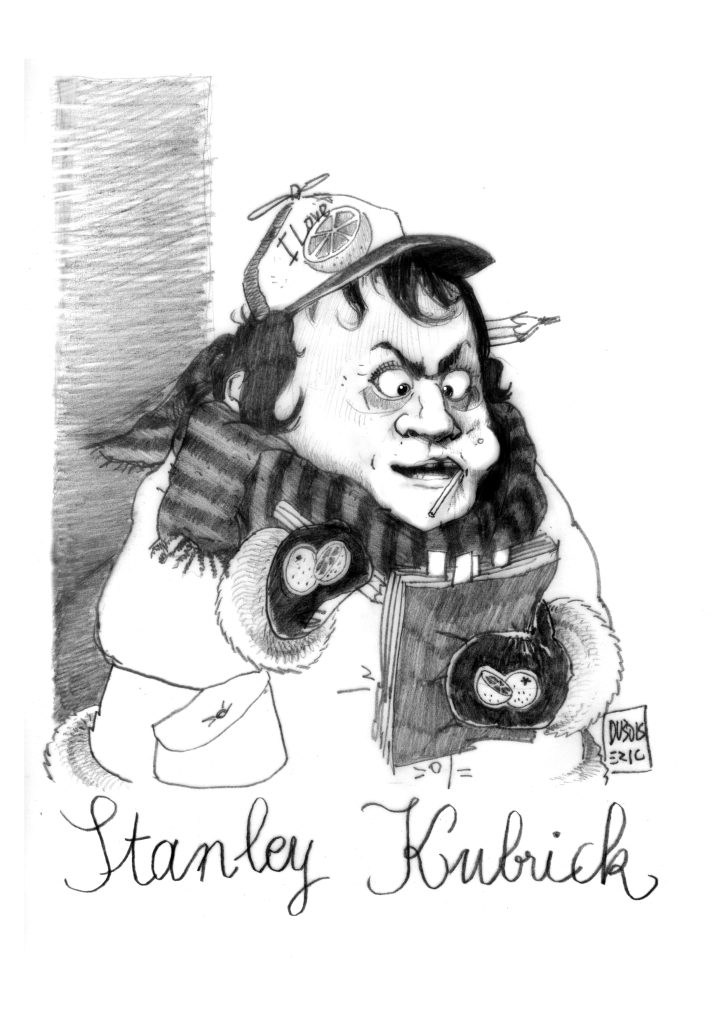
Pencil imaginary sketch of Stanley Kubrick as a 12 year old with pencil, clipboard, baseball cap.

Stanley Kubrick’s Nativity play diaries, age 12.

In 1942 a precocious young twelve-year old by the name of Stanley Kubrick was given the job of directing the Christmas nativity play at St Jerome School in New York. Stanley kept a journal, hand-written in crayon, from the age of eight. This is the first time that permission has been given to reproduce extracts from them.

5th November 1942
Miss Pritchard has asked me to direct the nativity play this year. I asked her what the budget was likely to be. She said that there was no budget but that I would have full access to the dressing-up box and the cardboard manger from last year. It means that I will have to scale down my ideas somewhat. The flashback scene to the parting of the Red Sea will have to go as will the recreation of the Great Flood incorporating a full size Ark. However I eventually agree to take on the project.

9th December 1942
Have completed the script for the play, “Stanley Kubrick’s Birth of Christ”. I intend to stage a modern dress version with Herod dressed as Adolf Hitler and his soldiers as SS officers. I am having a meeting with Miss Pritchard to discuss my ideas later this afternoon.

10th December 1942
Miss Pritchard has branded my ideas “too controversial”. She was particularly critical of my intention for Mary to deliver Jesus by Caesarean Section. She has insisted that I work from the script for last year’s play. I refuse until she threatens to send me to the headmaster’s office. I grudgingly accept her terms.

18th December 1942
First rehearsal. I have made the cast hike around Central Park wearing their costumes to get a feeling of what Mary and Joseph’s journey to Bethlehem must have been like. After three hours, Patty-Sue started crying and said she wanted her mother. I reluctantly send the cast home. Tony asked if we could have Bethlehem burn to the ground during the final act. I tell him that Miss Pritchard has expressly forbidden the use of any special effects after my request for three pints of stage blood for the birthing scene.

Pencil imaginary sketch of Stanley Kubrick as a 12 year old with pencil, clipboard, baseball cap.

Continues at https://carnalcine.ma/interviews/stanley-kubricks-nativity-play-diaries-age-12/

A photo of Cath Le Couteur against a corkboard backdrop. Her name is on a title card overlaid with 'Shooting People co-founder' underneath.

Web pioneer Cath Le Couteur on digital utopias, closing Shooting People, film collectives & the future.

“I’m not an anti-tech person. Shooters was built on technology. But I am mindful that we want technology that doesn’t extract, technology that enables people.”

In the mid-90s, long before social networks and smart phones, Cath entered the world’s first cyber-cafe in Soho, London to message a cyber-girlfriend in Australia. There she met Cyberia’s founder Eva Pascoe, and joined the woman-owned company that shaped the early-90s UK web-scene. Next she went to BBC Online, still a quirky start-up at the BBC figuring out How To Internet, befriended the late Jess Search who started producing her films. Using London Filmmakers Coop to borrow their kit they have a Big Idea – what if the film coop culture of filmmakers helping each other, met the Usenet lists, forums and chat-rooms Cath encountered at Cyberia?

So together they founded Shooting People in 1998, a daily email bulletin running on GNU Mailman. It began with 60 email addresses and grew by the time I left in 2004 to 40,000, after spending several years post-Netribution 1 working for them. They transformed British and indie film culture – a rare British startup that launched in New York and survived, but never sold to VCs – or any bidders. They helped filmmakers from Asif Kapadia to Jack ‘Adolescence’ Thorne with a punk, fun, marketing-savvy mutual aid network that’s kind of the opposite to most of the attention-desperate, self-exploiting influencers scrabbling for pennies on the billionaires’ platforms today. And now after 27 years they’ve decided to close.

I really enjoyed the conversation, remembering the early days around her kitchen table, considering what happened and where next. It means a lot she kicks off the first of three interviews for our last Issue, 25.5 – all with people who instigated something big in indie-film/indie-web but never got the attention they deserved…

The following text has been copied to the clipboard

It’s hard not to be nostalgic for me about that, that period of the web, because I felt like when the dotcom crash happened, which is sort of early naughts, like early 2000, there’s this sort of period of time before social media and smartphones change everything in say, 2008. Can you remember that time? I mean, did you, is it just me being nostalgic or, or was it actually quite special? No, I don’t, I don’t, I don’t think it’s you being nostalgic. I think, I think the early days, early days of internet were absolutely utopian. Like they were, and there was a lot of you, you utopian. And I don’t mean that in a, in a kind of a fantasy, you guys all wanted a, a kind of, you know, idealistic world where everybody could, everybody anywhere could learn anything they wanted. But it was, it was a very, um, promising, hopeful place that, that wasn’t based on ad revenue, that wasn’t based on click bait and wasn’t based on extraction or data. It was about the productivity of, of connecting and sharing. So it was a really wonderful place to be in in terms of, it’s the general kind of what we, what we felt the future could be. But it changed pretty quickly. I mean, the Internet became a shopping mall pretty quickly. Yeah. Um, but I think, you know, in, if I look at it through a kind of shooting people lens or ethos in the same way, I think that non-mainstream film will always continue. I think people that are different or are looking for something different or are looking to be able to express themselves or get their stories out that perhaps aren’t part of mainstream will always find gaps. And it’s why even now after we circle back to, to, to right here and now, and we’re obviously looking at another tipping point with AI, I think there will always be people that find the gaps. And, and the big question I think is yeah, how can you new continue to empower and enable people and not extract is, is the danger of where things are heading now. But, but I, I have faith Nic, do you know what I mean? I don’t, I don’t, I kind of feel like, and I look around and, and yes, Shooters is, is closing at this point after 27 years. But, but for me, the big kind of, the big part of that, the really great part of that is proof of concept. You know, 27 years without institutional funding and online independent network of independent filmmakers wanting to tell their own stories worked. So I kind of think it will also continue to work. And it’s, it’s about kind of finding the, the, the gaps and the, you know, the side rooms and, you know, if you, even in general, I mean, you’ll be really aware of this, it’s like, what is it 12% of people that are working class working mainstream filmmaking right now?

You know? And, and same for queer Bipoc women. It’s like, it really hasn’t changed that much. And where do those people start? They find the, they start their own collectives. They find the side doors, they find the ways to kind of reach out and find each other and start their own kind of networks and spaces. So I kind of feel like there will always be people looking for ways to kind of connect and come together that, that, that exist outside the mainstream. But I do think, um, it’s hard. I think it’s increasingly hard in, in today’s world of how, how to be sustainable. And that’s where I think, um, we need new ideas and, and, and I think the people that run the collectives have got the ideas. It’s just well, from others to kind of think about what might be possible in terms of, you know, supporting the grassroots. ’cause I really believe that if you just pour millions from the top down, you don’t grow anything. And actually you get a really vibrant film culture in this country and you get fantastic stories and you get the kind of, um, money back if you like, if you fund what’s happening on the ground.

Mm-hmm. Yeah. In some ways it should be the perfect time because Kit is ubiquitous. You can shoot 4K on your phone. Yeah. You know, it’s like the totally, the tools are here, don’t need the budget. The tools Are here, the tools are cheaper, is the opportunity. No, it’s not. Why.

Yeah. Yeah. You’ve got a global audience you can distribute to the world. Yeah. High speed broadband, no problem. Yeah, yeah, Yeah. But the opportunity isn’t there. And you know, and part of that is the kind of capricious extraction, kind of new modes of thought and thinking from the streamers. And also a lack of kind of innovative thinking, I think around government. I think there are absolutely, um, options that could, uh, change things for people on the ground. But in the meantime, I do believe people on the ground will continue to kind of find the gaps and ways to connect.

Yeah. Government seems to have just basically for this whole last 25 years kind of gone, we don’t really understand this so we’ll, we’ll allow these powerful people who come to meet with us tell us how it, how it should be. Oh, it’s, I went to a school, to a primary school tour yesterday and they were talking about homework and they said, yeah, we do the homework via Google Classroom. And it’s like, how did Google get into running primary school classrooms? It’s an ad network, I had no idea. I’m so naïve. Right. That’s fascinating. Fascinating and terrifying, yeah.

And this, I think probably the same with to an extent the way, yeah. If you speak to a teenager today who wants to be a filmmaker, probably a lot of the things you and me would say based on the last 25 years, they’d look at us like they just don’t. For them, it’s just like, how do you get more people to follow you on one of three platforms? I guess Instagram, TikTok or YouTube. That’s probably their only kind of question is how to get more follows or, But I think their questions will be more than that. I think their questions will be more than that. I think their question will also be, is there a space where at nine o’clock on a Wednesday night, I can put out a call and say, has anyone got a fog machine? And somebody is gonna come back and go, yes mate, I do. How can I help? And that is that that kind of scrappy scheming sharing I think doesn’t go anywhere. And I think the desire for that doesn’t go anywhere either. Um, it’s, it’s how can these spaces work? And, and you know, you’re right. It’s like, you know, on the bigger kind of political level, it’s like, why don’t we have film common spaces? You know, there’s plenty of high streets that aren’t being used, so why can’t local councils kick in and let’s have some flexible film spaces. There could be a script room in the morning and a castle rehearsing space in the afternoon and has a lock and key for people to share kit and all the rest of it. Or why can’t we take a 0.0001% of the streaming profits and, and put that into micro budget collectives? Or, you know, why can’t we have kind of a way for what I think is frustrating? And I see it because I see it right now. There’s so many amazing collectives springing up loads and loads and loads of them, and they, it’s really difficult for some of those people because most public funding requires people to have a limited company. You know, and then there’s all the admin and overheads and all of that that comes with it. So again, why can’t we just skim 0.0001% of streaming profits or 0.0001% of the tax credit and, and put it into some pots where people can apply just to run flexible grassroots collectives up and down their country. Yeah. And small bits of money can, you know, can make such a big impact. And I think your teen who does care about how many views he is getting for the film that he’s made, will also want to be part of a group of people who are also all trying to kind of get stuff made that doesn’t change, really doesn’t, I just think, um, we have to be the people that own it. You know what I mean? It’s not Google classrooms. It has to be owned by the people who are doing it or shaping it, I think. Yeah. Top down kind of communities just will, will never work. Support the grassroots and you’ll get a fantastic flourishing of things and ideas and stories and work. And you know, if you look at this really interesting stats, if you look at the BFI stats on, there’s some really amazing percentage. It’s like 42% of everyone who’s made a feature film, their first feature film came from a collective or small grassroots community. It’s a really high stat. So if you want to be supporting your kind of future culture, then let’s come up with innovative ways to make that sustainable.

It sounds like Shooters closing isn’t coinciding with you stepping, stepping outta the, the indie film space or, Or I mean, I don’t know there as I Yes, there’s lots of projects that I would like to get my teeth into properly. So, um, and, and you know, I live, I live, I love film, I love cinema. Absolutely love it. And I absolutely believe in community as a way for much better, um, opportunity for everyone.

Regional filmmakers, working class filmmakers, people that don’t just have, you know, money and connections basically. I really believe in that stuff that that is how you actually get really interesting culture and you kind of have ways for, um, as I said, people to open side doors. But yeah, first time filmmakers feature filmmakers and it’s amazing statistic, how many, how many of them came through grassroots collectives? Yeah. I I didn’t know that. That’s some amazing, yeah. I’ll, I’ll pull, I’ll pull. I, I, I think, um, I think Steven Fellows may have sent me that one, but yeah, you’ll find it. I think it was published, it was publicly published. Yeah.

And, and, um, are there any collectives you, you would name, check or re recommend people look into because there a lot? Oh, Well, yes. I mean part of, part of the legacy for us is leaving up behind a handpicked curated list of about 80, um, different organizations. So that’s kind of handpicked curated list. But, um, if I was, uh, coming up with ones off the top of my head, um, absolutely Isra Al Kassi and the T A P E Collective, it’s a brilliant network collective, um, that interestingly hasn’t just been kind of championing independent voices but is now itself going into distribution. I think Bounce is really cool for its energy and, and getting people out into the cinemas and seeing lots and lots of different work. Um, We are Parable, the Black Collective, um, there’s the Queer Filmmakers Network. I mean there’s lots, there’s that list of resources. If I’m allowed to like plug anything, I would love to plug shootingpeople.org/resources because there’re amazing people out there, um, doing amazing things. And that’s how people be able to find others to continue doing the good work. So though the site is is, or the list is no more that, that list will remain the Yes. So we’re leaving up, we’re leaving up that which is handpicked, um, list of just amazing, um, orgs that are building spaces for community to flourish. And that’s right around the uk lots of regional orgs there as well. Um, we’re leaving up a database of funds and opportunities ’cause we, um, for a long time have kind of, um, tried to see whatever fund or opportunity comes in. Um, we’ve pushed that out to the shoots community. So there’s quite a good database that we wanted to leave up because even if the dates might change next year, people will still be able to scan it and go, oh, is that fund still running? And so that database is being, um, left up and we’re also leading, leaving up, um, uh, just short film highlights. So we ran the New Shoots filmmakers competition and the new Shoots actors competition. In fact, um, for years and years. Um, you might remember May, perhaps when you were with Shooters, it was Film the Month. Mm-hmm. Okay. And then it became shortcuts and then it became new shoots. Um, but basically we’ve left up, um, the kind of best of short films across that, that competition that’s run for years and years and years. So people can just watch some of the, um, short films that, uh, have done really well. So those three things stay up. Yeah.

Super Nice indefinitely, however long that, that, that is useful for people. Yeah.

Okay. These are the two very quick, probably quick answered questions, but like, did you get any offers to buy shooting people? Um, ’cause that, that presumably, uh, we got, We got asked for the data. Yes, yes, yes. Had three people saying, can we buy your data? And we went, no, no, you can’t. So yeah, I mean, interesting isn’t it, it wasn’t ever offers to kind of by Shooting People, but it was, we would like to buy your data and no, you’re not having it, Just the mailing list. No way that they want the, the list archive so they could sort of, I dunno, feed it into a learning, into A No, it was people, we weren’t, we weren’t, we weren’t all your people and their email addresses and no, you’re not having that. Yeah. I mean, I, I never in a million million years do that. Um, but yes, that’s also the way of the world, I guess. Mm-hmm. S what people and, uh, so no, we turned all of that down.

And you, you said it’s a great, um, example of something that, that that paid for itself. Uh, yeah. So I have to ask it. It’s ending not because it would hit a financial block in the road?Nope. No, it’s end, it’s ending because 27 years is long enough. But in truth, I mean, it, it got harder and harder to keep it sustainable. I mean, one of the big things, and Jess and I were always felt certain and sure about this, was that Shooters had to be accessible, had to be, in order for it to be accessible, it had to be really low cost membership. Um, I think over that 27 years, we raised the price three times. And as of 2027, you could still join shooters for 20 quid. That was the price that we had when you started. So you could come in as a first timer and join shooters in 2027 for 20 quid. So that was always really important. Um, what that meant was that in general about, in, in terms of running costs and all the rest of it, membership kind of probably was about two thirds covered, two thirds. So we always had to find a third of extra income for it to just break even, basically. Um, and again, you’ll be, um, very well versed in the number of different ways that we brought in that income, whether it was books or DVDs, whether it was doing deals with, uh, the first Netflix in the day. What was it called for? What was the DVD set? Love Film – Love film. Um, whether, and you know, that how we’ve done that extra income piece has changed depending on, you know, and we just had to be nimble basically, where could we kind of get money? And I would say the last eight years really that income has come through sponsorship. So that’s people, you know, partnering with us to sponsor Shooters. And increasingly that got difficult. I mean, post COVID, most people’s marketing budgets were completely slashed. So it’s not the reason that we’re closing. No, but it got a harder and harder battle for sure. And, and I was never going to do that thing of doubling membership fees or anything like that. So if we can’t make this work by keeping it low cost accessible and then drawing in income somewhere, um, then we shouldn’t run. But, but, and, but we did and we did, and we had some fantastic partners. You know, we had a really, and we had long partnerships, very long partnership with Nikon right up to us closing, very long partnership with Zipcar. Um, very, very long partnership with Puma, in fact. Um, but you know, in a, that stuff does get hard. It always gets hard because people change at those companies and, you know, marketing budgets change and, but yeah. Anyone that looks at our accounts will know that we’re not making a fortune that we, we were just breaking even every year. And I’d have liked to have made more because, you know, you make more money, you can do more. Right. Yeah. Always had more ideas than we had, um, funding to kind of do them. Um, but in the end, yeah, it, it, it needed, um, it, it needed more for us to be able to do everything we wanted, but that’s okay. We broke even. Yeah. Good enough.

You mentioned Jess though, and I feel it would be sort of wrong to not like mention her just Yeah. Dear beautiful darling, Jess.

Yeah, It’s quite, uh, it is still a bit of somehow a bit of a shock, even though it’s been, Oh, I think it’s a shock to hundreds and hundreds of people still. Yes. Yeah. Her death was just, um, yeah, horrible, awful. But, you know, she did it in the most amazing ways. Only Jess would go calling herself a lucky f****r and, you know, putting on massive celebrations and parties. She was amazing. And, you know, she just wouldn’t have happened without Jess and she just probably wouldn’t have happened about the friendship that Jess and I had because we, we really loved being silly and a big part of shooters was just being able to have fun. Yeah. And the community responded to that, you know, they, they were always super, super game. And maybe that’s the other benefit that you have when you start a creative community is that people are up for stuff.

I think that’s, that’s the, that’s the side that I, I think I was quite privileged to be in this early stage where it was, there was no office, there was just, it was either your flat or Jess’s. Yeah. Uh, well it was her mom’s house for the start and then later on her flat That’s the best place To start things, right? Yeah. Yeah. Kitchen tables, flats, over a kitchen table. Yeah.

Yeah. Um, Yeah. And yeah, it’d always be, you both were really busy, but it’d always be, I had this crazy idea, what about a filmmaker-on-board sticker that we could put in the back of, and I’m pretty sure that like when I saw that post that you have announced, I was like, oh, I’d forgotten that. Yeah. Didn’t, didn’t we print those and hand them out to everybody who came to the party so they could stick them in the Yeah. But Again, it was like being able to work with people like you who were like, yeah, let’s do it. Yeah. It was very, Yeah, let’s do it. Let’s do it, let’s do it. Um, and I do miss, it’s funny, you know, when you talk about kind of those early days, because I think about how possible it was for most people in, in the early nineties to kind of, you know, rent was cheap, right? Space was cheap. We weren’t paying a fortune on rent. We weren’t paying a fortune for spaces. We could rock up to any kind of bar and say, Hey folks, we want to kind of get a, a bunch of people to pile in here on a Wednesday night. You good with that? It’ll be really busy par They’d be like, sure, no problem. You’d never have that. Now it’s like, how much are you gonna hire for your blah, blah, blah, blah. Um, and and back in those days when rent was cheap and space was cheap, um, creative culture was really thriving. And there was part of me that kind of thought, gee, post COVID, there’s all this dead space everywhere. Are we gonna see, is it gonna kind of evolve and we gonna see an amazing kind of thriving upswell of creative possibility because space is now cheap again, or accessible, or people just give you access to space. Hasn’t happened. I’m still, there’s Good point. But I I there’s so many. Yeah. Because if, if this is cheap, things can happen. But then I think, is it also, there’s a kind of fairly depressed vibe in this country and I, you know, I would try, but I think going to speak to local councils and saying, Hey, by the way, this shop that’s, that’s not being used for the last kind of three years. Can we have it to do some community creative like meetings and networks and groups like that? I fear that the answer wouldn’t be yes, I wish it was. I think that there’s a kind of thing, things feel less free on one level, but then maybe it’s up to the next generation to kind of find their wiggle their way through, scrap their way through, um, duck and dive, um, squat places. You know, go back to the, the kind of days of, of, you know, ducking and diving in order to make those things happen. Because if they do, and I think we are seeing that, we are seeing it in new collectives that keeps springing up, um, doing the best that they can with the resources that they’ve got, then that will mean that culture continues, the spirit continues, and then people find each other work gets made and so on.

You’re totally onto something with the, the council has access to so much space. Also, there have so many links of property developers who have also loads of places sitting empty who they can probably tell you, look, you’re not gonna, we not keep giving you more license unless you give this to some local collectors until you manage to rent it. Um, yeah. And it’ll come from the next gen knocking on the doors and going, come on, don’t be insane.

Yeah. I think that’s all. I think that’s maybe the only job. Uh, and I, I recognize obviously your earlier web than me. I kind of really didn’t get properly didn’t have on my own site till 99. So I, and I only kind of really, and –that was earlier tho Nic.

You it’s still relative. – It’s early – relative to the young people today. Yeah, but still. Um, but I, I feel we, one job we have is to try and remind people that it is possible. ’cause I think if you scroll and you’ve grown up with only smartphones and these giant American networks, American and Chinese networks, you sort of can’t believe that there’s anything outside of that. There’s no alternative way. And if that’s constantly telling you things aren’t possible, then you will start to believe that. And we come from an era where you could live through 15 years of Thatcherism and still find, you know, squat party raves and a completely thriving film co-op culture. Totally right.

In the heart of sort of Thatcher era didn’t totally didn’t stop it. Yeah. Um, And actually my my own kind of, and this is based on absolutely nothing. It’s just based on a kind of like sense vibe thing. I think as you know, AI comes in stronger and stronger. I think the desire for people, including young people to meet up physically is growing. I think physical spaces are gonna become really special places, places that, that, uh, become increasingly important. Um, and, and that, you know, there is only so much, I’m not, you know, I’m not an anti, um, tech person by any stretch. I mean, Shooters was built on technology. Um, but I am, uh, mindful that we want technology that doesn’t extract, we want technology that enables people. And I think physical events and more of that, is it going hand in hand with tech that can enable and empower people? Is is the future and the future for film, the Future for culture, really. But it will come, I’m, I, I really believe it will come from next generation kids coming through. There’s a, there’s enough who are like, I don’t want this as my future. I want something else. And I want my stories to be told, and I wanna find my people and I wanna scrap around and get things done. And I don’t have much resource, but I would be able to do it if I connected with others.

Technology that doesn’t extract, that enables and empowers us. Yeah. Yeah. I mean, it’s, it is the thing though, isn’t it? It’s like all tech now that is just about click and extraction. Mm-hmm. Revenue. It’s like, no, let’s turn that around. I mean, we’re seeing festivals being run on Discord servers. I like that stuff. I’m like, that’s brilliant. Let’s use it. You know, Discord servers that have been used to run festivals, why not? Brilliant?

You mean to manage the festival? Or actually people go and watch the films on different Yeah. Just set up Discord Festival. You know, I think stuff is exciting and I think there’s more fluidity, you know, in a way I feel like closing Shooters now at the end of 27 years. I think, I think it’s the right time as well. I think the ways that that people are connecting now are so much more varied and so much more fluid. And actually that’s good. Hmm. We don’t need kind of, you know, big monolithic, um, things to be the answer. We just, we need to be part of fluid things that pop up and pop down and pop up and pop down and the people, the humans, um, in the ways that they need at that time.

Temporary autonomous spaces.Yeah. Yeah. Fluid, being able to respond fluidly, I think is is is key. I just think there could also be, I mean, for someone who’s had to be innovative and entrepreneurial in order to be able to kind of survive for as long as we did, um, it isn’t easy for others. It really isn’t. It’s, it’s, it’s pretty hard if you’re running collective community these days to be kind of sustainable. Yeah. So I do think there are ways that government, public money streamers, people like that could be thinking about the benefit to them of actually supporting. And it’s not much money supporting in a small way, grassroots collectors, because that’s when you get future interesting culture, you know, all the big, all the really innovative, interesting films. Most of those people have come through shooters. Like there’s a reason that people find their people.

Yeah. But if there’s support for, for that, so that communities and orgs like tape or bounce or we are parable or, you know, can actually get a bit of support or a bit of capital support, then things would be thriving even more.

Yeah. The, the whole architecture is great if you’re, um, a Hollywood studio wanting to shoot with the exact amount in the UK to get your tax incentive. And you’ve got an accountant who can figure out that exact amount that you need to shoot here to get that. And we, the taxpayer give them hundreds of millions to do that. That’s right. A tiny fraction of that. They, they not just like chuck a grant into a collective pot for grassroots. Yeah.

Just be a raffle. It could just literally be like the shooter’s raffle and you just randomly assign it. Yeah. Or to people that are building spaces and, and ways for people to come together. I think, you know,

The BFI could be doing that. I mean, collectives seem like a, an obvious place for them to support a diversity of film culture. That’s Right. And it feels old school, but it’s not. People are, you know, this is the future. It’s just, it’s just more fluid and more varied and in a way that’s kind of good. But if I, if only the way to support those things didn’t have to be so kind of, you’ve gotta have a limited company. You’ve gotta have been running for two years, you’ve gotta have a office address, you’ve got, you know, all these things. Yeah. But in the meantime, I think those, those, um, you know, those, that energy, that energy and that shooters energy in a way I is is will carry on. For sure. Yeah. A hundred percent break things, a thousand percent break Things.

How’s it felt since it stopped? Do you, have you noticed a sort of like a gap? Or do you like now getting new energy or, Oh, you’re sweet Nic? No, I feel, I feel excited. I feel excited for a bit of brain space and a bit of time to kind of think about what’s next for me. I mean, it’s, yeah, you run, you run a company really for a really, really long time, and you’ve just, there’s always, always things that you need to do. So it’s kind of amazing to be able to go, wow, I can just take a pause.

Um, you gonna travel or I’m, I’m gonna do all the really boring kind of account stuff and close stuff up, up kind of properly. And then start to look at, um, yeah. Whether I, which creative projects I’d like to put my head into next and how I’m gonna fund those and do those agile question

I have to ask about your tomato movie. Did what? Where did that get to? Oh, that lovely tomato movie that never got Tomato Festival movie. Yeah. Never got Its funding. Never got its funding. But again, it’s one in the drawer that I’d love to kind of pull out and go, actually now maybe I can put some time into seeing if I could get that funded.

I have this very nice memory of visiting you in Paris, um, when you were a Cine Foundation. Oh Wow. That’s a good memory.

You were staying in a sort of apartment with the other filmmakers. Yeah. Yeah.

And um, it, one of those moments, I remember specifically the quality of the tomatoes, bread and butter was like French just do the basics so well, that’s –Actually pretty much what I remember. Like the amazing breadsticks that were outside the flat. Right. And the fact that you could oysters were about 10 p and just shuck them on the floor. Yeah, no, that’s, my memory is definitely food of that as well. Wow. It was Brilliant. Cine Foundation, I went back to, I was back in Paris for the first time, you know, ages, um, when was it? Like about four months ago. And I went and visited Cine Foundation, um, because I had such kind of good memory. So it’s still there and it’s still taking filmmakers and the Cannes Film Festival is still running the residency and still doing great things. There’s a kind of house for filmmakers basically that just hosts them. And then Yeah, they would describe it Residence. A residence where they kind of select six filmmakers from around the world. But then, yeah, you live together in a big apartment with a wonderful space bedroom studio each and shared living and shared kitchen. I remember at the time, actually what was amazing, I was with two South Korean filmmakers, Sri Lankan filmmaker, French Moroccan filmmaker, and we kind of, we’d have discussions about how you could make a film cheapest. We figured out that the post-production was Sri Lanka that directly in stuff was in South Korea. I don’t think anything was in the UK at that point, but yeah. That’s a great memory you’ve got. Yeah. Cine Foundation was brilliant. We’ll, see,

I guess that’s a good entry into the sort of going back to the very roots of Shooters because it, it, it was reminded me in this, in the closing event that it came out of a, a specific film project you were working on. Yeah. It specifically came out of me and Jess meeting and becoming best friends almost instantly, and deciding that we wanted to make a film together. And then thinking, God, wouldn’t it be brilliant if other filmmakers that we know who are doing it themselves would be able to advise us, help us. ’cause of course, we didn’t have any skills or contacts or money. So Absolutely. It was out of Jess and I wanting to make a film together that Shooters was born. Be like, how brilliant if we could get all the filmmakers that we know in one space where we could just trade information directly. And that was the beginning.

Okay. So the network came before you were actually even making the first film. ’cause that was, that was, was that Spin? It was 1 7, 4 film with, um, Sally Phillips. I think it came Post Us, I think in the, it was kind of, which shot the film. And I remember having a discussion about God, wouldn’t it be brilliant if we had other filmmakers that could help us understand, and maybe we wouldn’t have made as many mistakes as we made, and gosh, it’d be really, really brilliant to kind of find out how we could, you know, get a, uh, some posts sound done on this. So I think it was kind of through the making of 1 7 4 that Shooters started around the same time.

Were, were you experiencing that kind of hive mind effect through email lists and IRC or other kind of online networks through the, through your day job? Yes, exactly. So I was working at Cyberia, which was the first internet cafe. Jess was at Channel Four doing TV stuff. And yeah, absolutely early, early, early internet days. And my job at Cyberia was very much a kind of cultural, um, community job in a way where it was using these latest technologies, how can we build kind of community with it? So in a way, I was exposed to a lot of ways in which kind of new technology was able to kind of shape communities in different ways. So it seemed natural to me that you could start effectively a, a email list that had lots and lots of different people on it that would be able to contribute their thoughts and ideas that that seemed kind of quite natural, even though Yes, it was early, early, early days. I mean, people still didn’t have email around 98, I think.

Yeah, totally. Um, so c how did you get into Cyberia? What was, what was the sort of path to to to that I, I’m just kind of, of fascinated. Well, I’m, I’m trying to go a picture of this era, I don’t even know how to answer that. Um, a cyber girlfriend in Australia who was a kind of cyber artist and had email, you know, before anybody in the world had email. And so I’d gone to this cafe to communicate with her because she’d insisted that, that I must obviously communicate when I was in London with her. So I was like, okay, well I’ll find out how you do this email thing. And I just walked into Cyberia, the cafe and happened to meet the big boss there, Eva Pascoe, who was brilliant. And again, a bit like my first meeting with Jess, we just hit it off. And I guess those were also the days where you could kind of chat with someone like each other and suddenly someone’s offering you a job. And I had no idea about anything technical at that stage. I just knew that I liked the idea of how could you use technology to kind of bring different communities into this space. I was up for that. Um, we liked each other and, and that started my first kind of like paid job in the uk.

What sort, what sort of year was this? Do you have a, an idea…? A dyke girlfriend in Australia is the answer to your question.

Right. Okay. I’ll put that down. Insisting I write to her. Yeah.

And, and then trying to find a, a net cafe to, to do that, right? Yeah. Finding a net cafe to do that meeting over, getting a job there, meeting Jess, making our first film. And then it kind of felt very natural to, um, you know, we’re felt natural and also exciting to have a space where kind of, you know, other filmmakers could share information and get films made and seen.

This was like middle nineties, Uh, 95, 96 is when I started, uh, at Cyberia. 96 and 98 was when we started Shooters. So I had two years at, at Cyberia, and then, yeah, we started Shooters, but I, I was using a lot of the team from Cyberia. So our first servers and stuff, I was borrowing servers that Cyberia was running on and saying to the tech boys, come on, gimme some space. Host this thing for me.

Is that where you met Stu? No, that came later. So, uh, we set Shooting People up and then Jess and I ran it out of our bedrooms for about three years. I had left Cyberia by then and joined the startup team of BBC Online. And that’s where I met Stu. Stu was the CTO of, um, the very early, very beginnings of BBC online.

I Didn’t know that. I knew he was, because he was at another.com when I first knew him or He’d been running that. Yeah. Yeah. He was one of part of that early, early UK infrastructure tech setup. And also he came out of philosophy degrees, which most of the early tech guys in those days did. Um, they were kind of philosophy tech thinkers. So yeah, I met Stuart at the BBC. Um, and then I think, and then by 2001, I’d left the BBC and was started taking Shooters with Jess to subscription. And we were running, we were off and away. Yeah. Somehow sometimes I forget that.

Yeah, Stu came out a bit later and he, had he done something Fax Your MP? Was that, was he involved in that? That’s Really great you remember that? Yeah, that’s was brilliant. Yeah, he was absolutely involved with that.

Yeah. Yeah. I remember he was the one who put me onto Cory Doctorow as well in about 2003. <Yeah, no, yeah. He wasn’t that famous. Yeah. Yeah. No, there were lots and lots of people that, that, um, Steve Bobrick was another big kind of web, um, tech guy that is still a very, very old friend of, um, Stu’s that was part of kind of early nineties or mid nineties kind of tech.com UK land.

It Must have been a really small community then. I’m trying to picture the size of it, but It was tiny. Yeah. It wasn’t, well, it felt, it felt tiny, but then actually it was, it, it was bigger in the sense that Wired was kind of very big at the time. So, and Wired were doing loads and loads of events and very excited around technology. And so different groups kind of split off depending on, you know, where your interests were. And Cyberia was kind of in the arts kind of cultural side of things. And then Wired was also kind of in the arts cultural, and then there was a group called Haddock, which was much more kind of hardcore tech, um, that all the early kind of startup guys that were, you know, part of ISPs and all the rest of it would join. But no, it was, um, it was fun. It was the, as as you know, it was the optimism of, of what this thing could be for People.

Yeah. That’s the the thing, the sort of the the come down we’ve been living ever since, you know? Yeah. And just, just you, your time at the BBC that you said, that was when BBC online was still kind of a startup, it was a sort small team as well. Yeah, it Was just starting. Yeah. Right. Yeah. And, you know, some of the questions and thoughts about how they could structure BBC to be online was always really, really interesting. You know, should they have different online in education and in news and in also they just have this one space. And of course they began with this one space, and then it kind of filtered out. But again, I felt lucky because I felt like I was able to do early days of Siberia and, and be part of shaping a lot of the arts cultural stuff. Then I got to be early days of BBC online, and then got out as it got codified and more kind of institutional, and then joined the Imagineering bit, which was much more experimental, and then decided, actually, no, I would run shoots full time. Lucky in terms of timing, kind of managed to kind of arrive at a time when yeah, things were just starting and new ideas was the kind of flavor and how could we do things and questions was a big part of it.

Hadn’t got to giant corporate meetings yet. It was still Hundred percent no. Yeah.

And it feels that Shooters were very lucky or probably wouldn’t have happened without that. Um, but it brought that into, into the indie film world, most of whom would not have really got any of that, I think for any other means. Maybe some of them on reading Wired. No, I mean, it, it, it was an extension of the film co-op community, right. Which was the London based big kind of like film community that, that you would locally kind of show up to kind of meet people, share information, find out if someone’s got a sound recorders. So it was obviously still happening, um, in lots of different ways, um, local physical, um, communities. But this was the first joined up where you could kind of be part of something that was UK wide. And it didn’t matter where you were, you could still find out from someone else how to shoot something on a DV camera or how you could use a mini disk at the time to do your sound recording. So yeah, it was the first time I think it was joined up kind of UK wide,

And it was, was just a, um, like a Mailman, uh, like a GNU Mailman mailing list. Right. Yep. And we would, I mean, what is fascinating to me about really how Shooters is run is I was always, always surprised that no one seemed to copy the core idea, which was, let’s just take in everybody’s questions and answers and thoughts and events, and then just push them out once a day to people.

And we did that from the day we started to the day that we’ve closed. And when we first started, yes, it was mailman lists, but I would manually pop them all in to the list and then, and then we would send them out. And then as the tech advance, we were able to do that automatically. It, it always felt, that was one of the things that I think a lot of other people attempted this, and they would, for whatever reason, just have zero curation, or they’d have so much curation, it would take weeks and you’d be waiting for, for something to appear. But a, you were doing it every day, but b you were really caring about the quality of what went out each day and trying to emerge people. Yeah. You were part of That. You were one of the editors. Yeah. And we would debate it, right? We would, we would, we took that very seriously. How can we, um, ensure best practice? How can we, um, make sure there isn’t too much repeat stuff? Because people can go and use search engines or look at the previous bulletins if there’s too much kind of repetitive stuff. So how do we keep it fresh? How do we keep it not lightless? How do we, um, yeah, make sure that the tone is kind of good. I mean, I think in general, we really didn’t do a huge amount of saying, you can’t post that to people ever really. But sometimes we would say, do you know what, maybe asking for someone to work on your film for free when you’re also saying that you’ve just pumped 10 grand into Kit. Isn’t that great? People might feel cross about that. You might not get the best responses to that. Have you thought about maybe you don’t have to have a crane and you could pay someone. Or at least recognize that if you are asking for someone to collaborate with you on a film, it’s a really, really big ask and ask yourself what are they gonna get out of it? And then think, how can you pitch that in a way that, um, is going to make people want to kind of collaborate with you? So we were really big on that actually. And, and, and in a way big on it because our judgment and you as a filmmaker’s editor would know that too. It’s like you would read it and go, well actually no, that’s, that’s, that sounds just a bit off. Mm-hmm. So I’ll just gently go back to that person and say why it feels off to me as a filmmaker. Yeah. And invariably, we really, really rarely had people coming back going, what do you mean? You’re telling me that I should, you know, consider reposting in this way. Most people would just repost. So, and in general, of course, you’d then have less and less and less and less of that because it’s self generated a kind of tone and a way of kind of asking people for things that the other people then embraced. That was good.

It’s, and it’s sort of completely lost in the kind of web two era, but I’m, I’m curious whether for you, when you sort of set up that sense of, these are the moderation guidelines, or this is we, we should try and foster a community, we shouldn’t just let it leave it to at lease itself. Was that something you’ve got from elsewhere or was, was that intuitive to you? Or… I don’t remember Nic.

Yeah, it’s a very long time ago. It was back In those days, there would, there would be forums that were unfiltered, right? So you just have loads. And I, I knew for myself what I would wanna read in the morning was, was stuff that was relevant and interesting and just not a lot of noise, I guess. Um, but in a way we were massively helped by, I mean, it sounds like we were doing a lot of work on the moderation. And actually we weren’t doing, we were, we were doing enough to help, help shape it, and the community did the rest. What really helped us was actually going to, to subscription, because then, of course, people that were prepared to invest 20 quid and be part of something and put some money down and invest in what they were gonna do meant that you actually lost a lot of noise. You didn’t have people just piling in for, to say something silly because they could, that’s true. You had people that really, really, really wanted to be making work or helping others or being part of another indie film production. So in a way, that side of it really, really helped too. We didn’t have a lot of noise because the people that joined were the people that really, really wanted to be making or working in and around indie film.

Yeah, that’s really true. Yeah. And I think in that period, I think the only angry stuff I, I remember was the sort of tension between say, actors on the actors list expecting to be paid equity rates and producers on the filmmakers list, trying to pay the lowest rate possible. And that’s that tension pre-day shooters and contin continue, continues today. It’s a really, it’s such a good point. And I think another thing that we were really, that felt really important to us was that the person who would edit the casting bulletin had to be an actor because they understood the issues for actors. And the person who edited the screenwriter’s bullet had to be a writer. Yeah. Yeah. –And I feel for youts– What are you doing with Netribution…

Probably we will shut it down, I think, I mean, I don’t wanna like copy you too much. Like we –Right–. And you Keep an eye, There’s Netribution, a limited company, which I do all my other stuff through. And then there’s Netribution, the website. And this year was to kind of test, is it, is there any desire to make a publication? And it started with quite a few people contributing. It’s really now just me, so I might as well just have my own blog, really. It’d be a bit simpler. Yeah. Um, it was nice to have an excuse to connect with people. Um, yeah, that was, I’d say the big upside and also reflect on, ’cause I think we vanished as a online voice a long, long time ago and just reflect on some of, ’cause we kept doing R and D projects for the last 20 years. Yeah. The last one was two years ago. We got lots of money for that. Um, and we never wrote much about the research outcomes. Um, right, right. Um, but this whole question of how can filmmakers online make a sustainable life themselves, it’s sort of never gone away. And it, for me, it’s still not answered. It’s still, yeah. It’s in some ways we’re in a worse place than we were 20 years ago. Yeah, no, I agree. I mean, there isn’t anybody that isn’t, hasn’t got two jobs, three jobs. Yeah. Um, and, and you know, even people, you know, speaking, um, maybe this we should take off record or well, maybe I just won’t mention her name, but a really well-known filmmaker who does not have a lot of money, um, and ends up in development in order to kind of get her film made, but is not paid for any of that and struggles to pay the rent. And yet, you know, she’s really established award-winning kind of filmmaker, but the assumption somehow is that she’d have enough money to just kind of keep working in development for free for months and months and months. So Her fame can sustain that she can eat her, her reputation. Yeah. I mean, Terrible. I understand that, that, you know, there, there’s all kinds of re requirements and, and one has to be very thoughtful about how funding works. But I think the question of sustainability is, uh, is is you’re absolutely right. Not going anywhere and, and very difficult. Very, very difficult. I mean, the jobs, um, I mean, and the one thing I feel good about with Shooting People is that, you know, jobs still, high end jobs still aren’t advertised. You know, 70% of jobs probably on high, high end. Again, that’s another BFI stat that was in the same stats as I pulled out of first time filmmakers. It’s like 72% of jobs or something aren’t advertised. And, you know, Shooting People was built to break that in a way to kind of give people opportunities. But, um, sustainability I think is high. Even if you are working on high-end productions now, the work just isn’t there. And that’s the streamers again. Yeah. Oh yeah, that’s the screen. So, so the fight is all, I think there’s always a fight. I just think the kind of size of the fight, what the fight looks like, kind of changes. Um, but if, yeah, fundamentally believe that culture is, you know, a varied kind of culture and, and is good for our wellbeing and it’s important for the arts, then yeah, we have to find a way through. Yeah. Yeah, we do. We totally do.
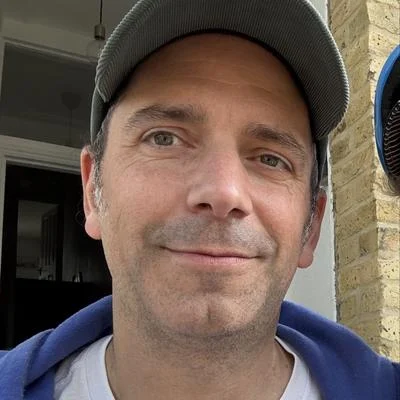

Mentioned resources:


Fediverse Reactions

Time-synched transcript built with Mark Boas’ Hyperaudio | Embedable link for video.

Screencap of Suchandrika's first article for Netribution in 2006 with title – "Look Who's Hawking - Meet Welsh Mountain Short Makers Alias McMahon & Jones"

Netribution, 25 years on

It’s 19-and-a-half years since I first emailed the late James MacGregor, in a state of major excitement: Netribution wanted to republish an article I’d written on work experience about short films!

That was May 2006. A month or so before, my brother and I had been checking out the mastheads of his beloved film magazines in our local Sainsbury’s, so I could find editors’ details and gain work experience (thank you, Hotdog magazine, RIP). That is an extremely mid-Noughties sentence. Hotdog itself was closed down in 2006. 

A 2005 graduate with an English Lit degree, I’d been teaching English in Spain, but knew that I really wanted to embark on a journalism career. Hotdog let me interview and review; those pieces led to more stories, which I used for my next work placement; and suddenly I was being published online! You couldn’t have told me that I wasn’t living in THE golden age of journalism.

Upon seeing my article republished on Netribution, I emailed James to offer him another story. He was very warm and encouraging, telling me: “We want to publish good quality material that stands the test of time” – a wonderful welcome. He introduced me to Nic Wistreich over email, and so our story began. 

Thanks to Netribution, I attended the London Film Festival for several years through the Noughties as press, darting in a daze between daytime screenings, before my evening shifts at my main job for The Associated Press, working on international breaking news. I had a lot of energy back in those days. Making the press pen at the LFF meant that I ended up on PR lists that were still helpful to me a decade later, leading to the making of the Black Mirror Cracked podcast for the Daily Mirror.

James and Nic suggested that I apply for the Berlinale Talent Campus’s Talent Press scheme, and gave me all the backing that a budding critic would need, like letters of recommendation and website analytics. I was accepted onto the 2008 cohort, and spent the week running around the festival with my colleagues from around the world, working with heroes like The Guardian’s late, legendary Derek Malcolm, and Stephanie Zacharek (then at Salon.com). The friends I made on that trip have led me to travel the world, from Lima in Peru, to finally making it to Brighton, a seaside city less than two hours by train from my hometown of London. 

What I’m trying to say is that Netribution changed my life in ways that I couldn’t have foreseen. Twenty years trying to make a living in the quicksand of a constantly-evolving media landscape is tough, but so much of the good I’ve been graced with in my career has come from Netribution. 

Now that I’m moving on from journalism to writing and making my own things, I’m grateful for everything I learned about creativity from writing for Netribution, and look back with wonder at the space and time I was given to grow. 

Here’s to another 25 years! 

Fediverse Reactions